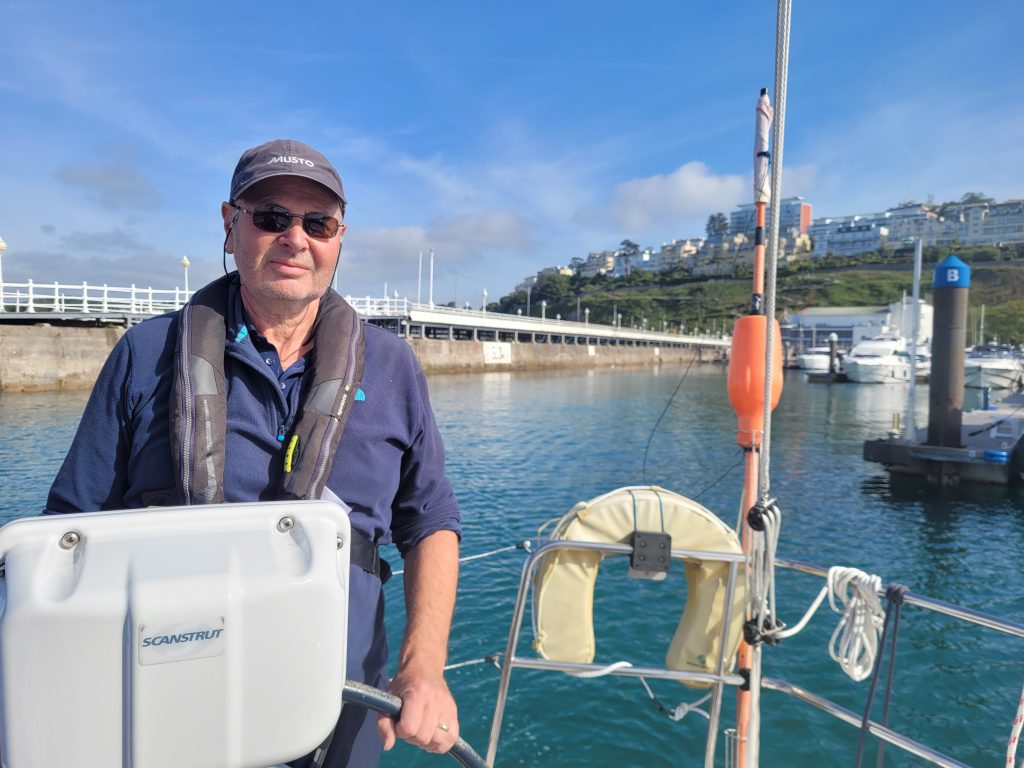
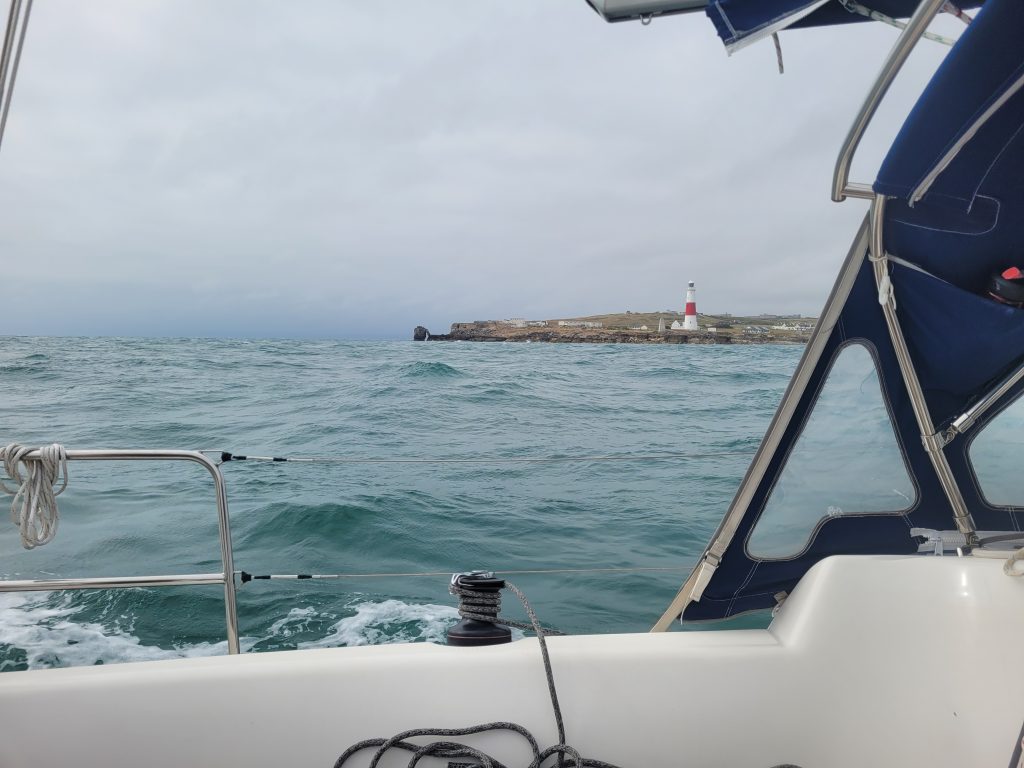
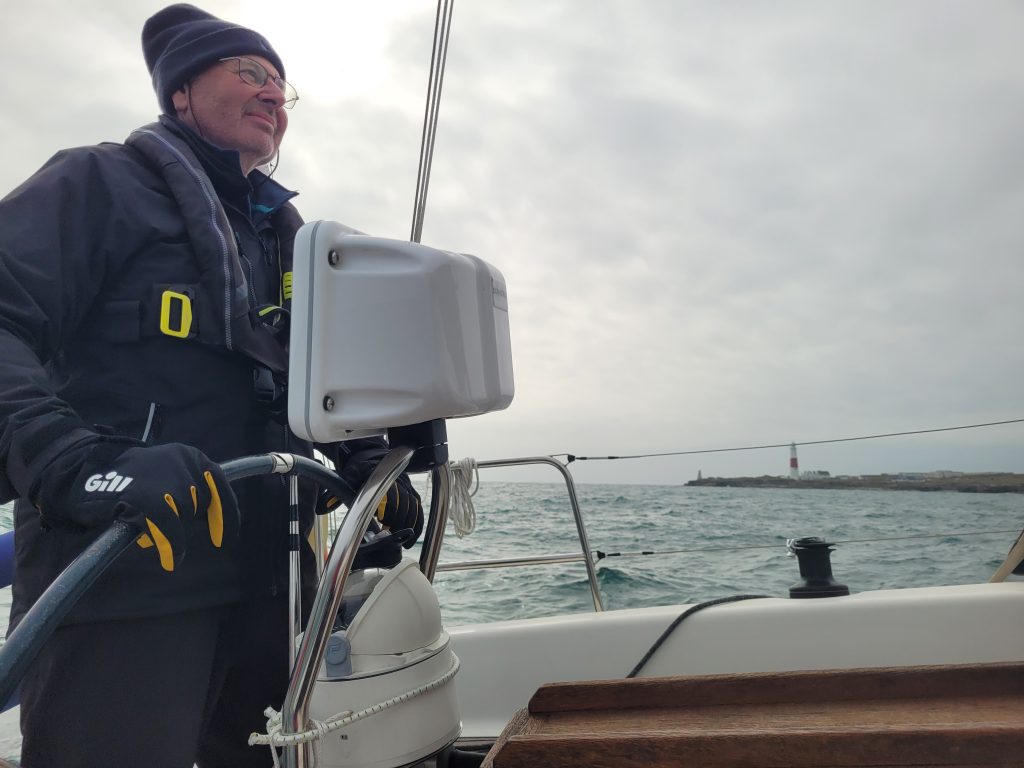
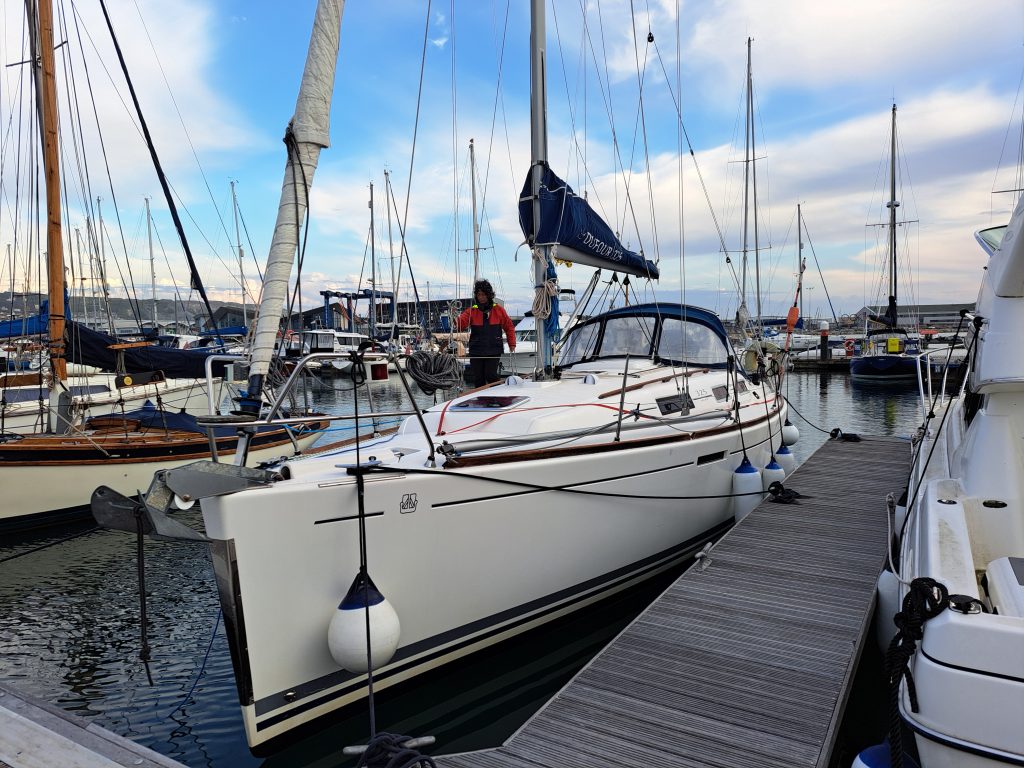
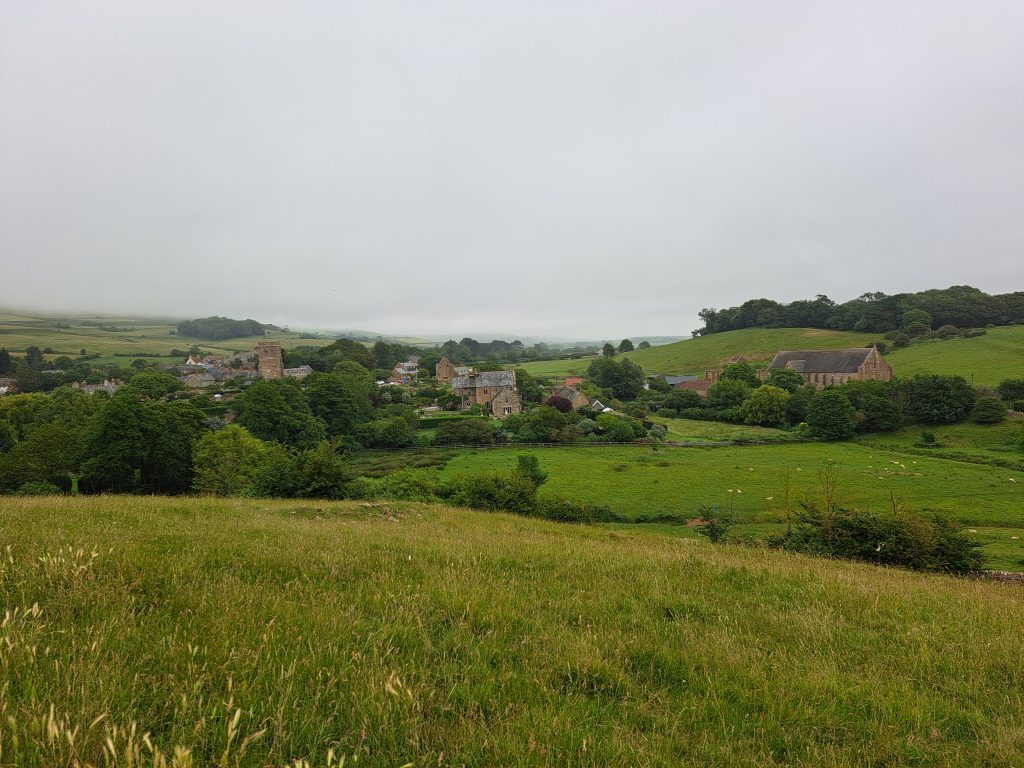
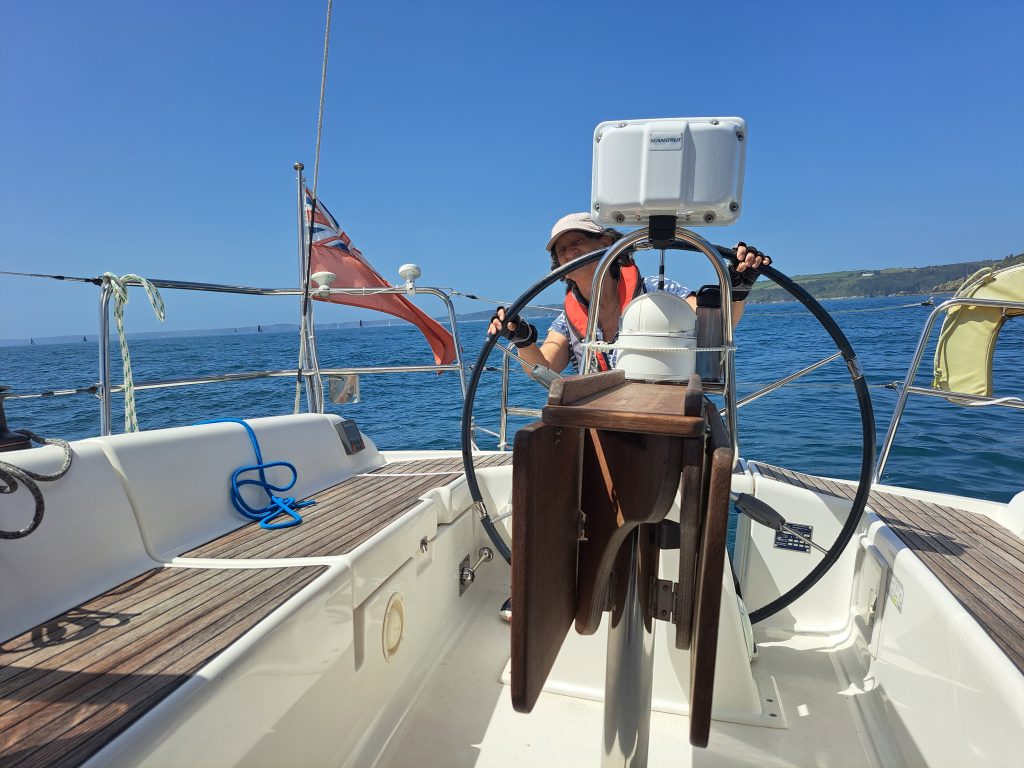
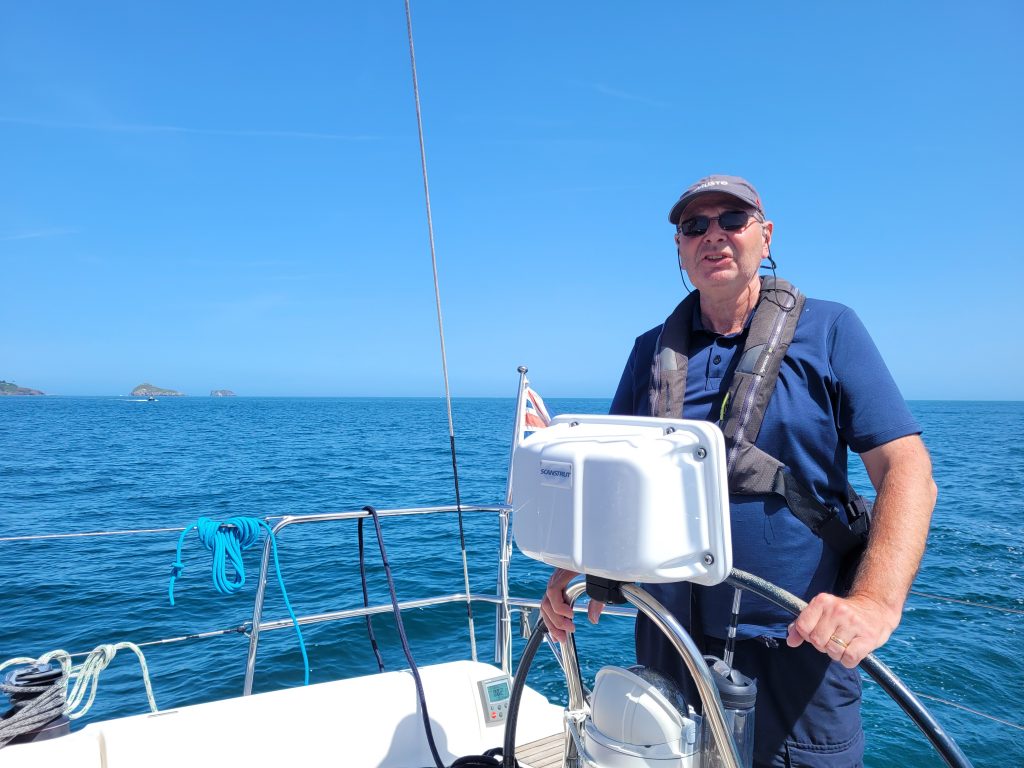
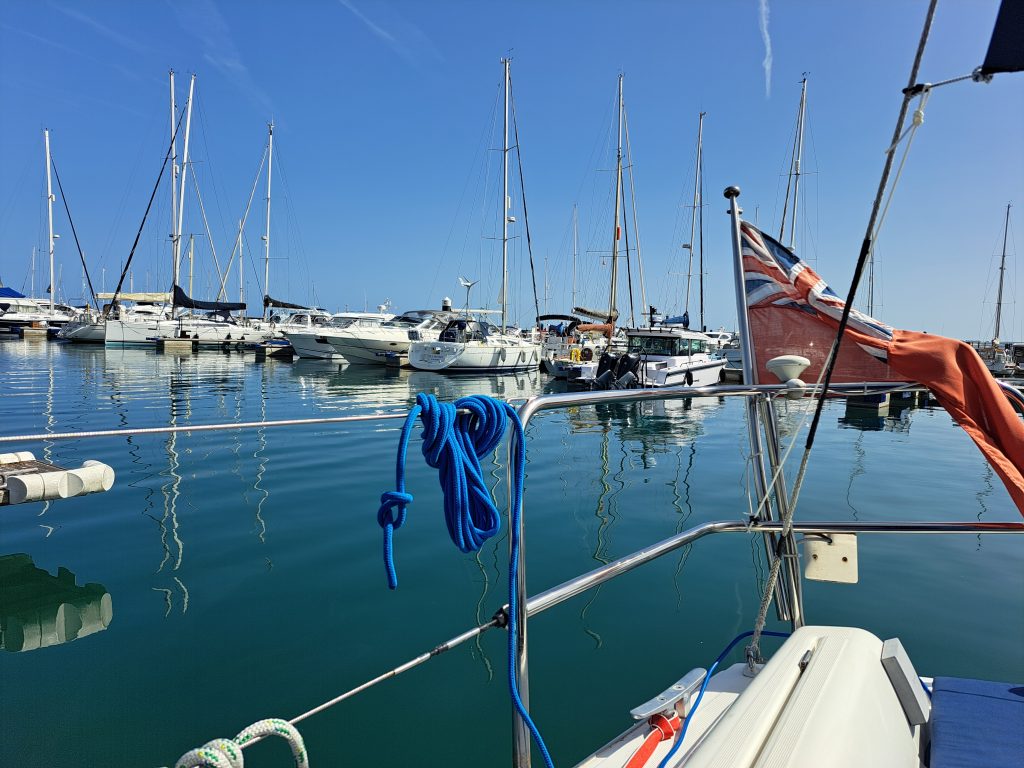
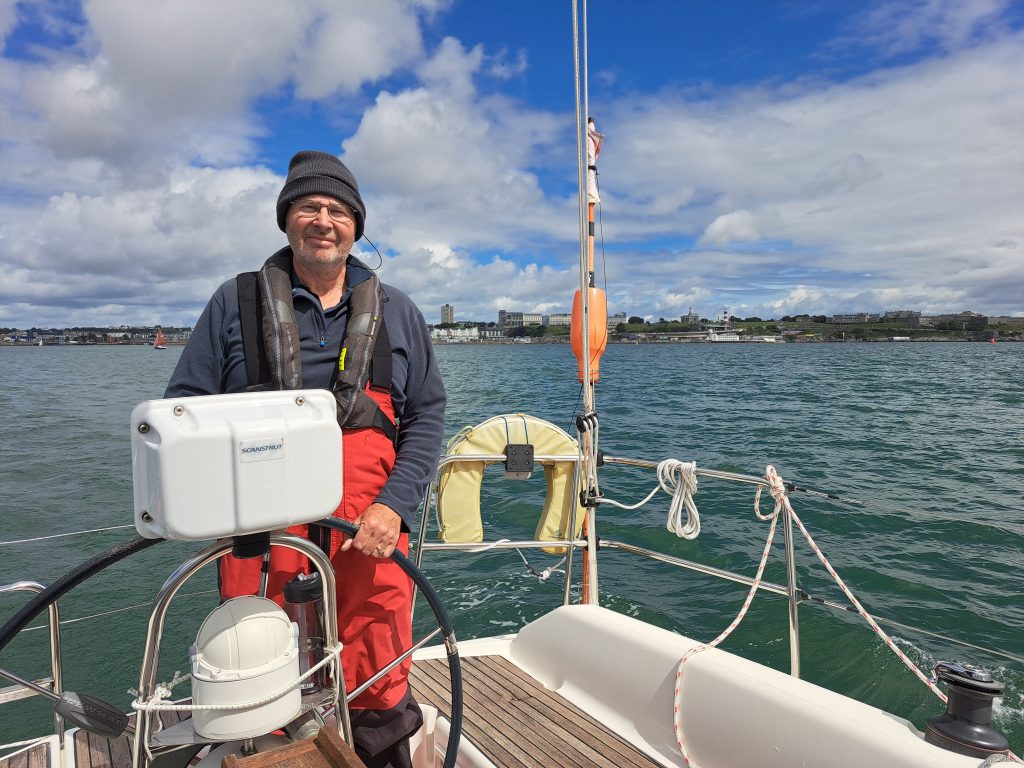
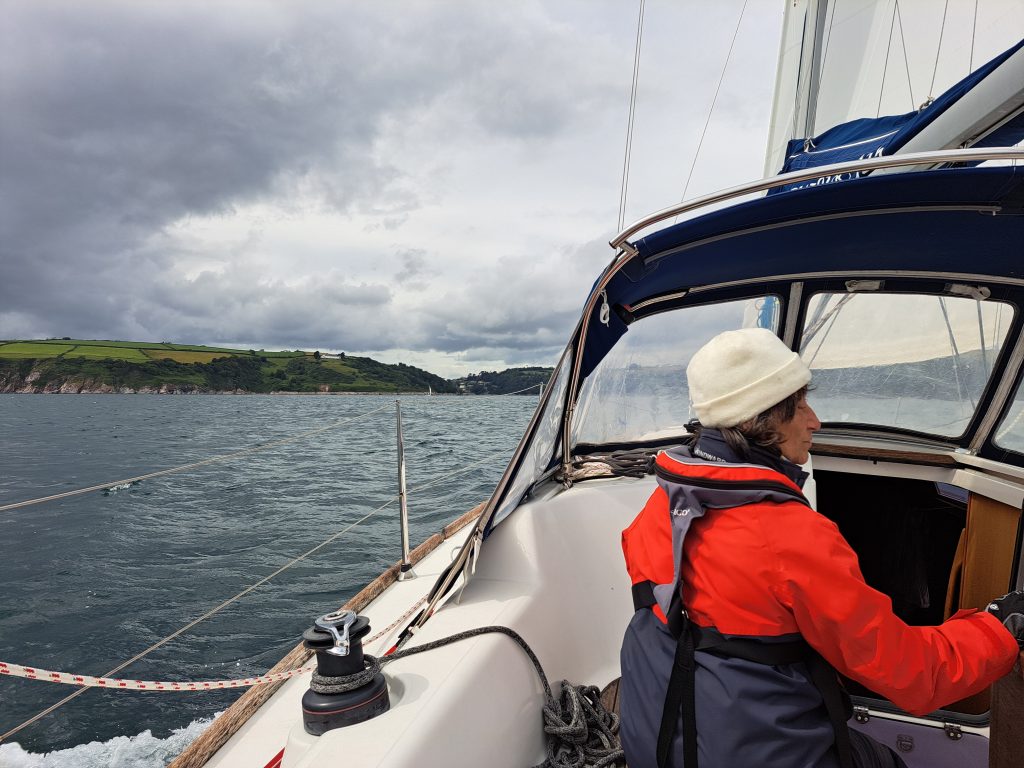
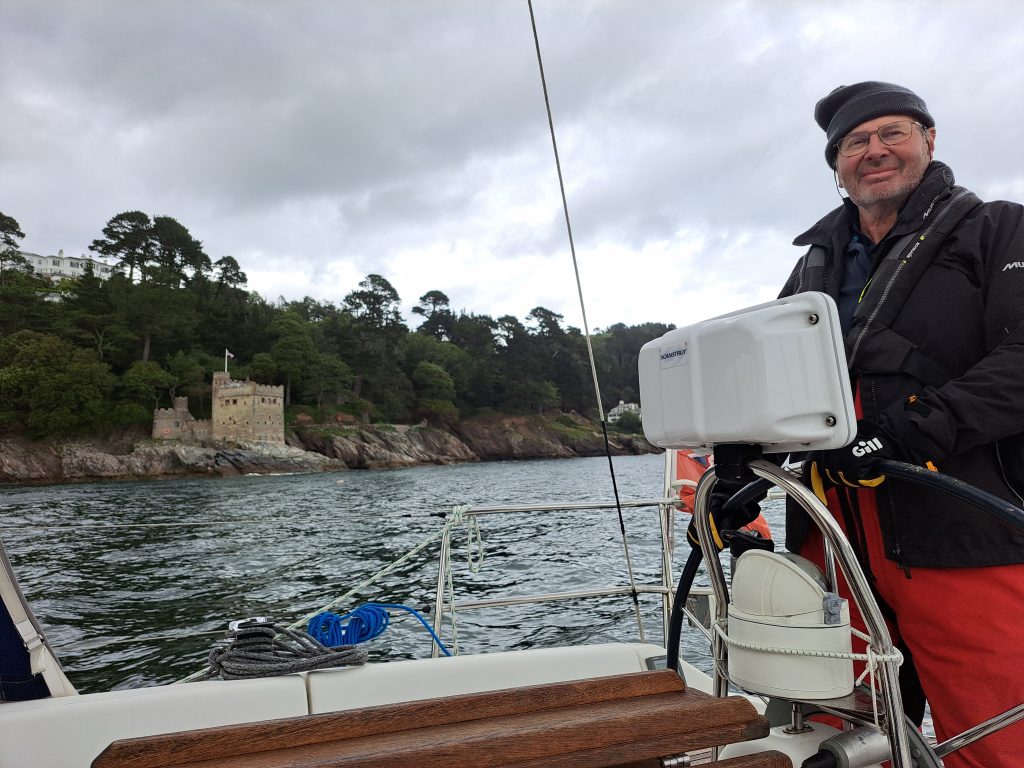
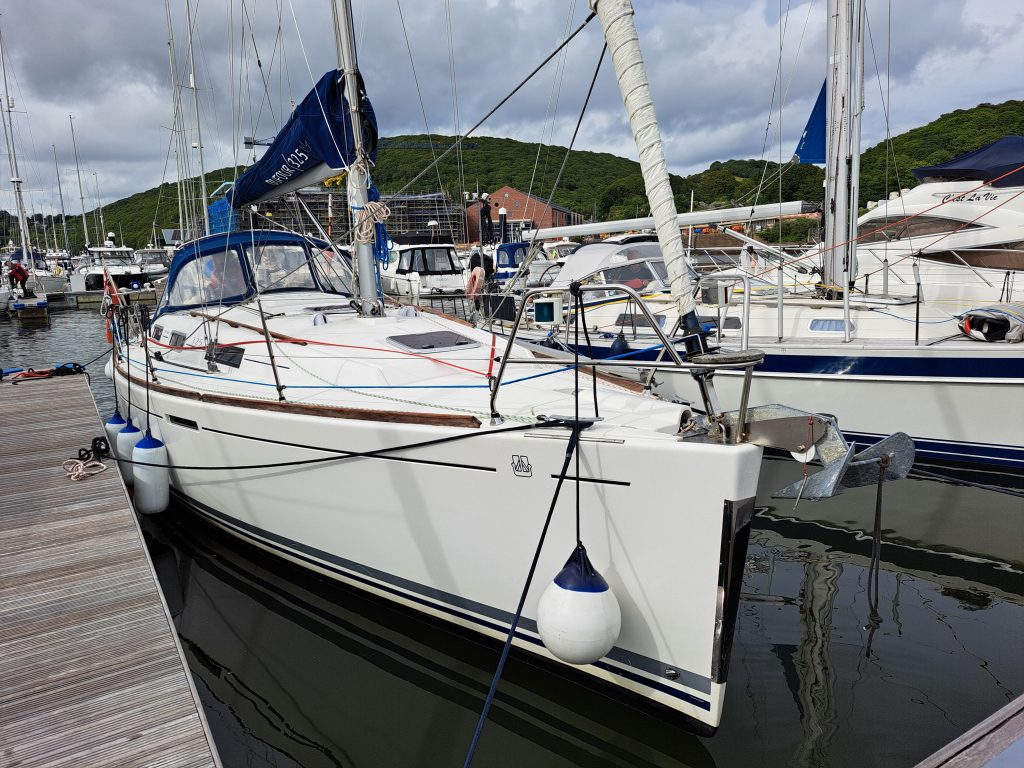
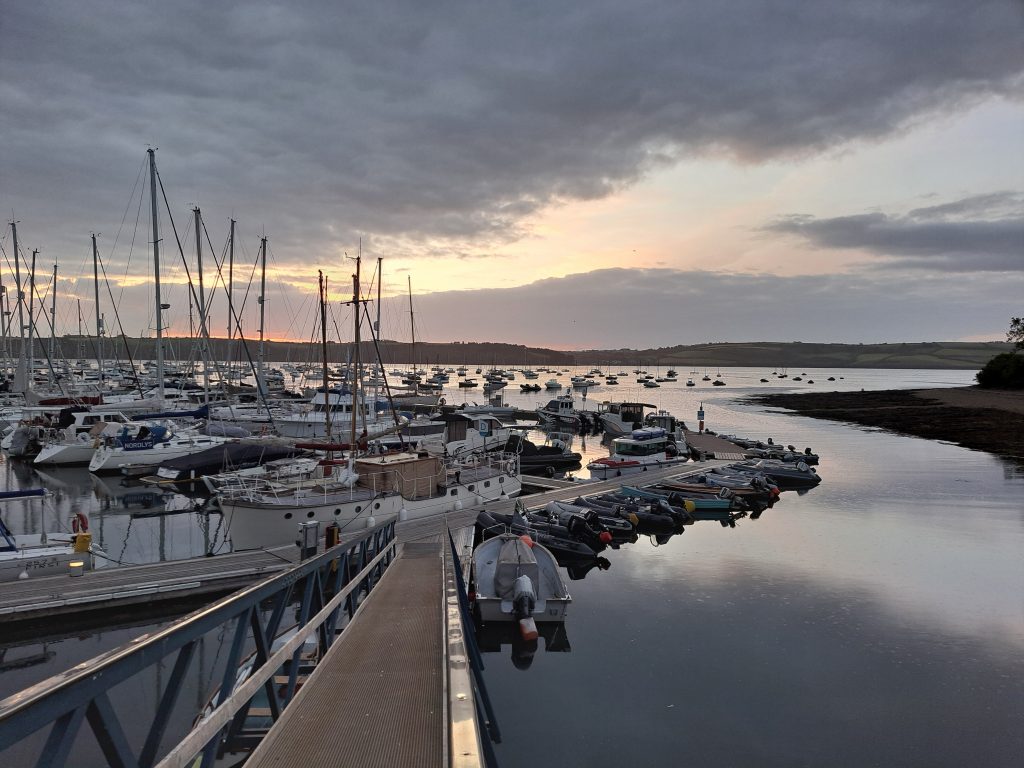
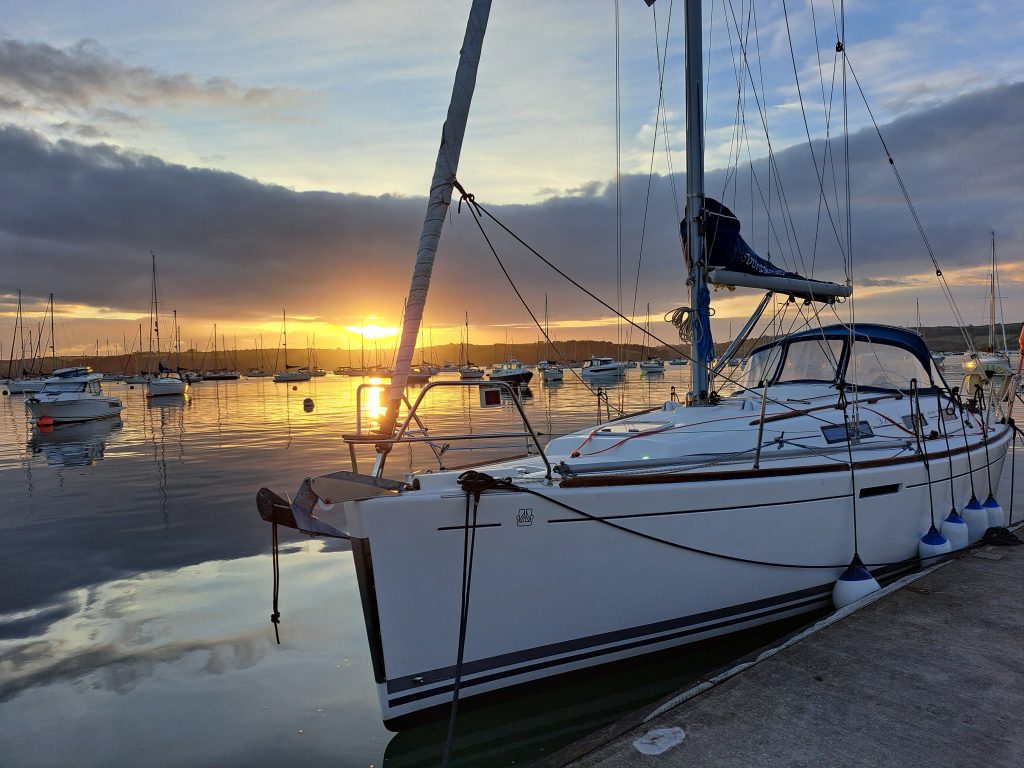
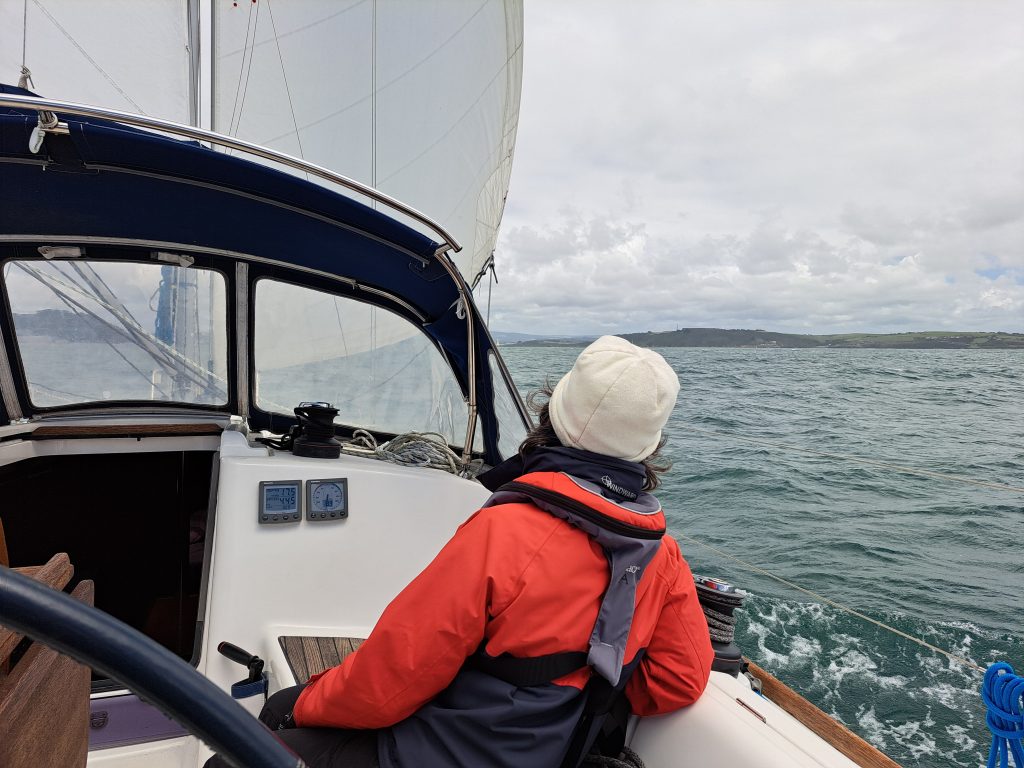
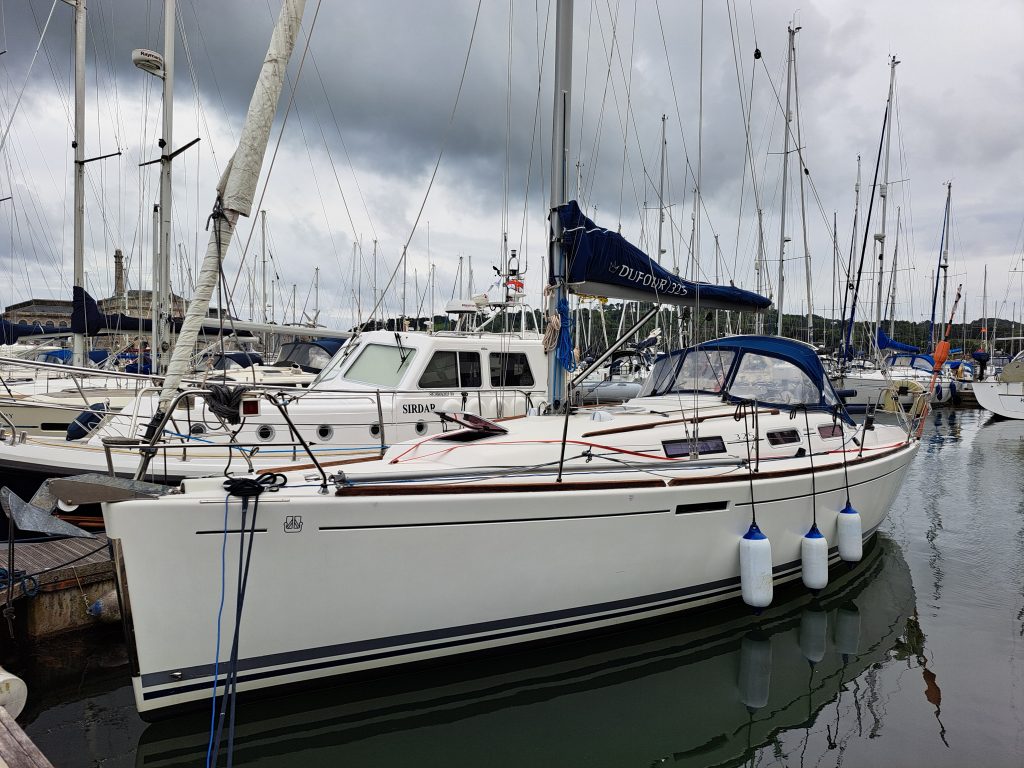
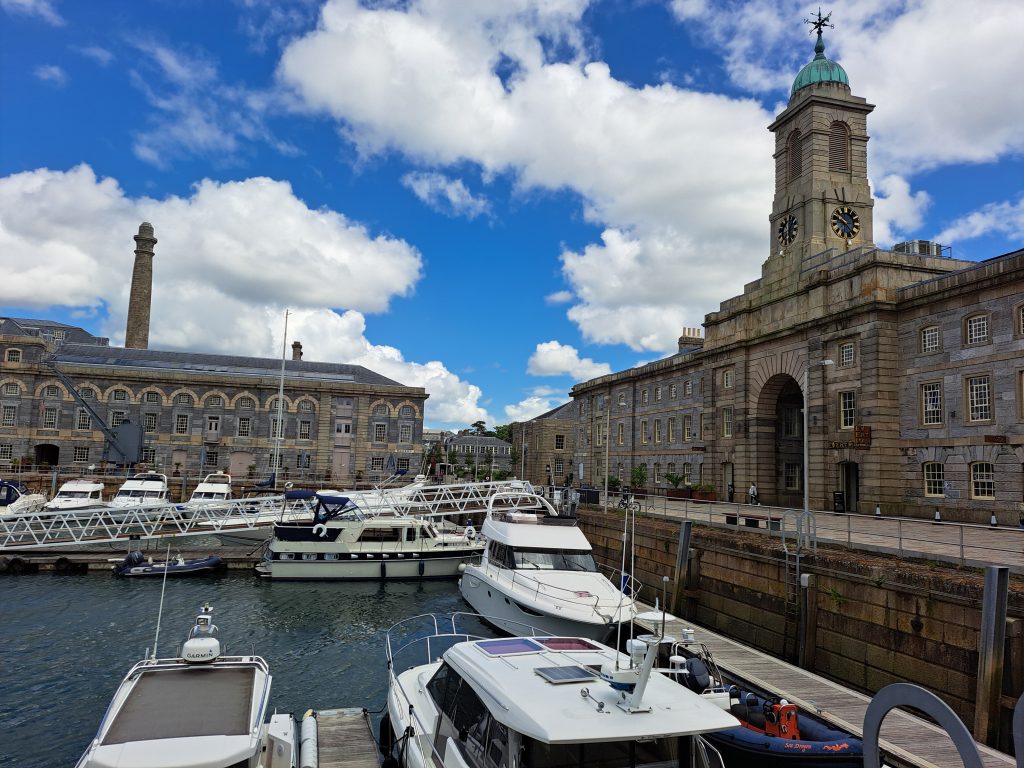
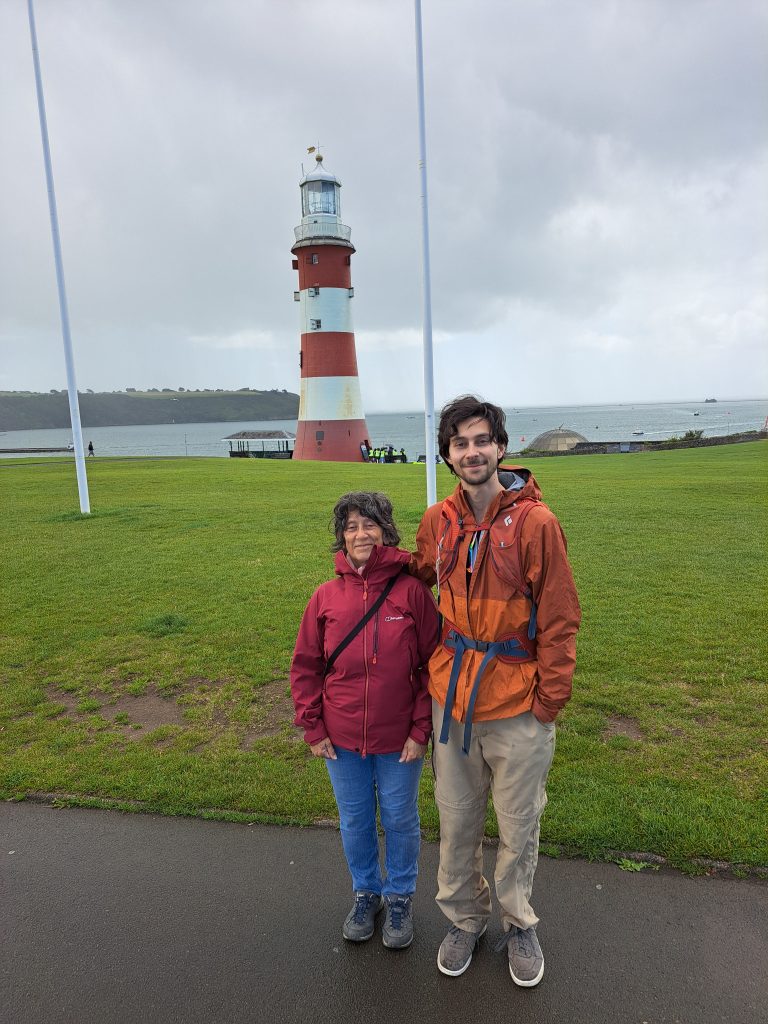
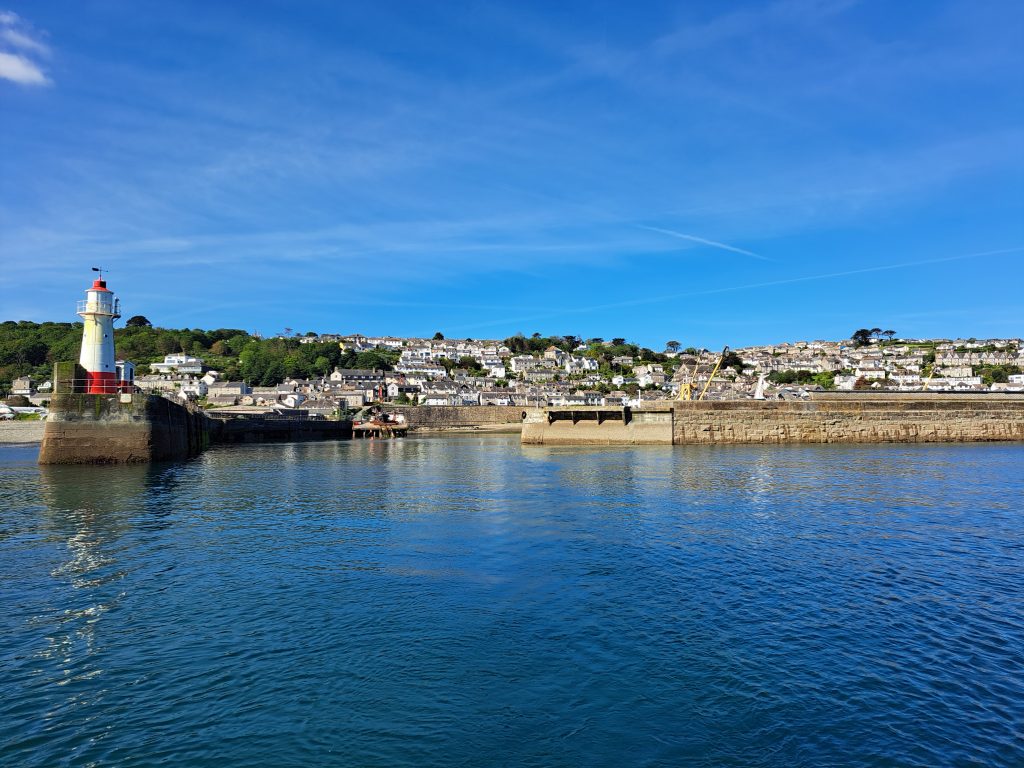
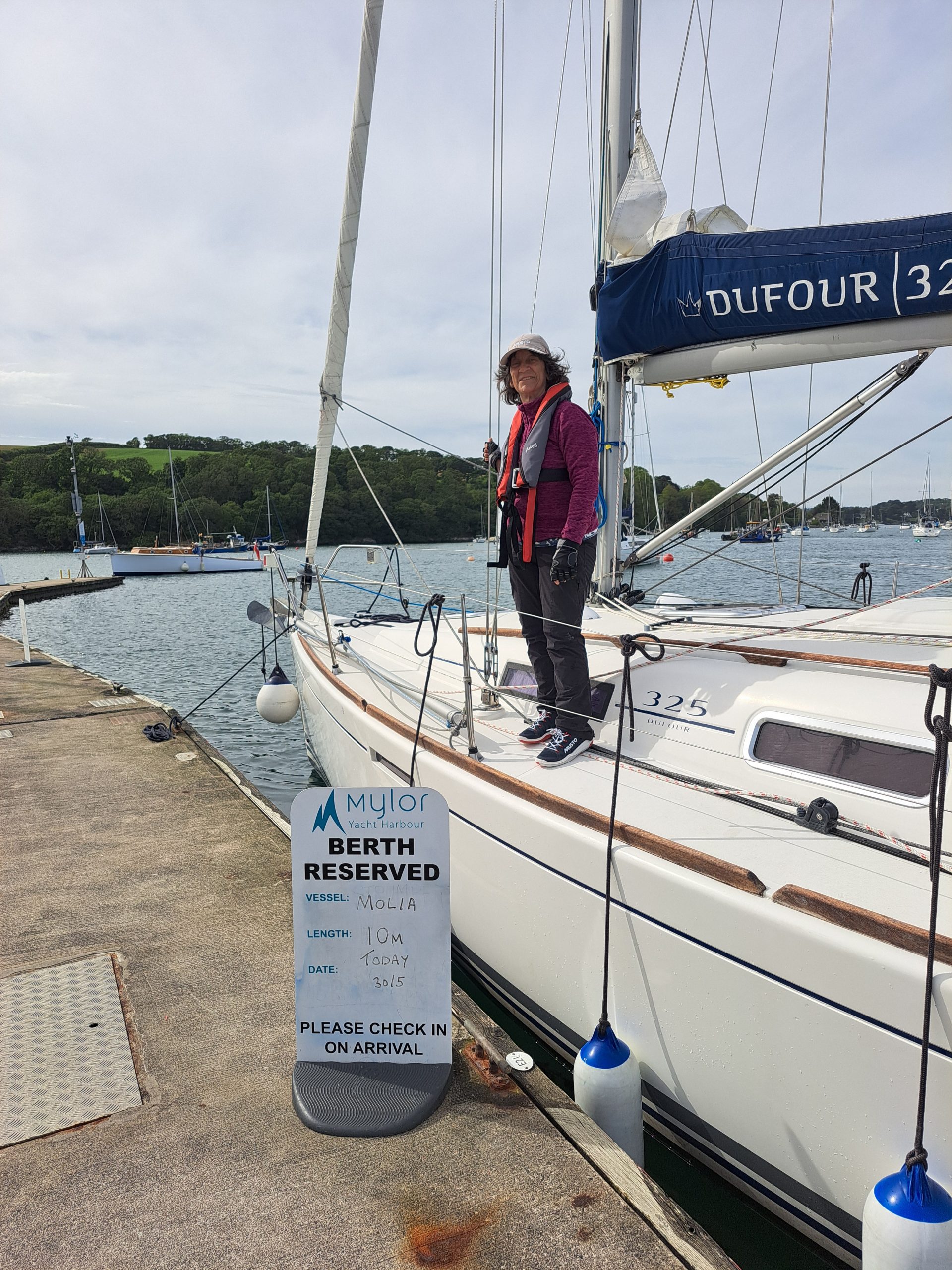
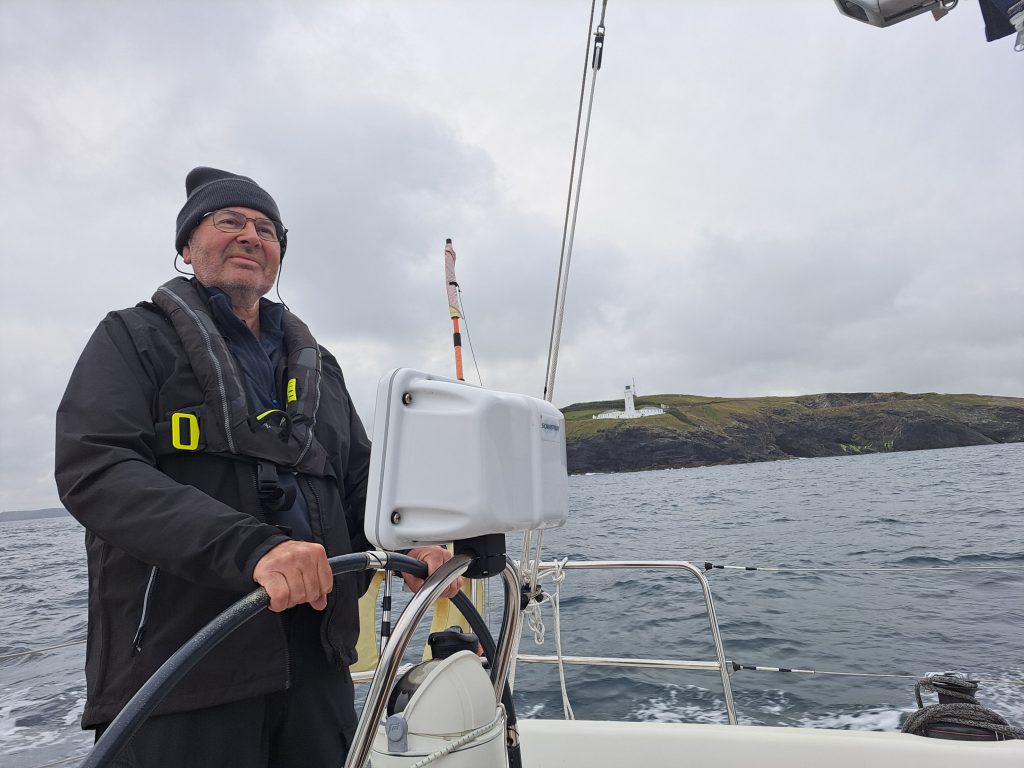
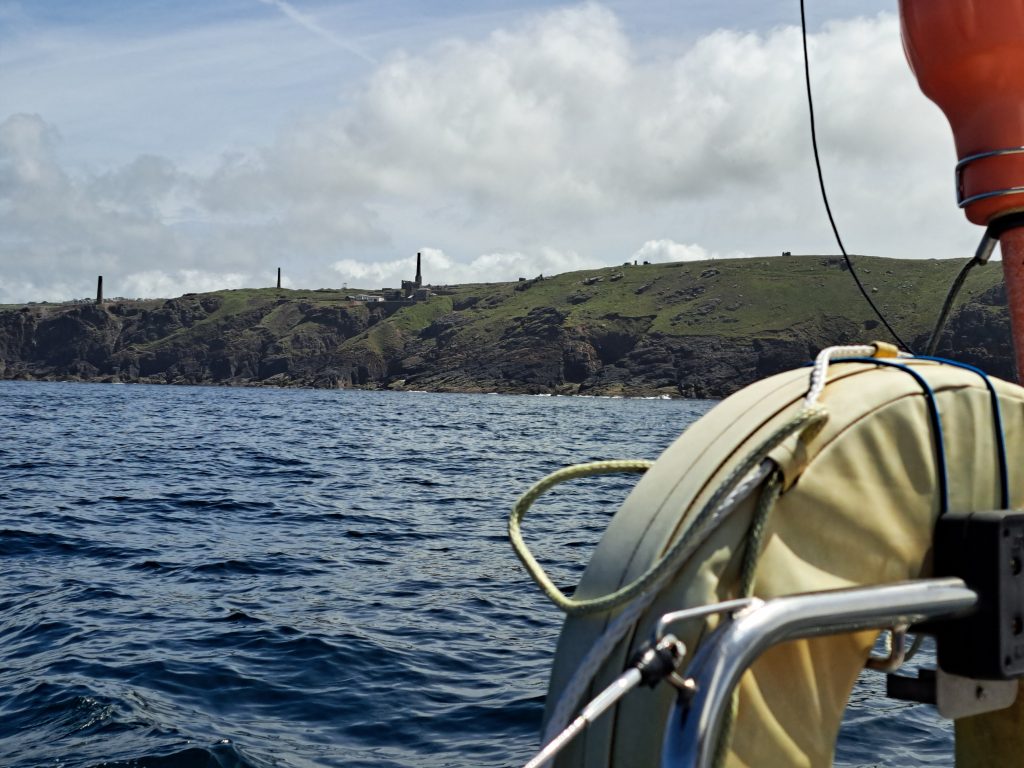
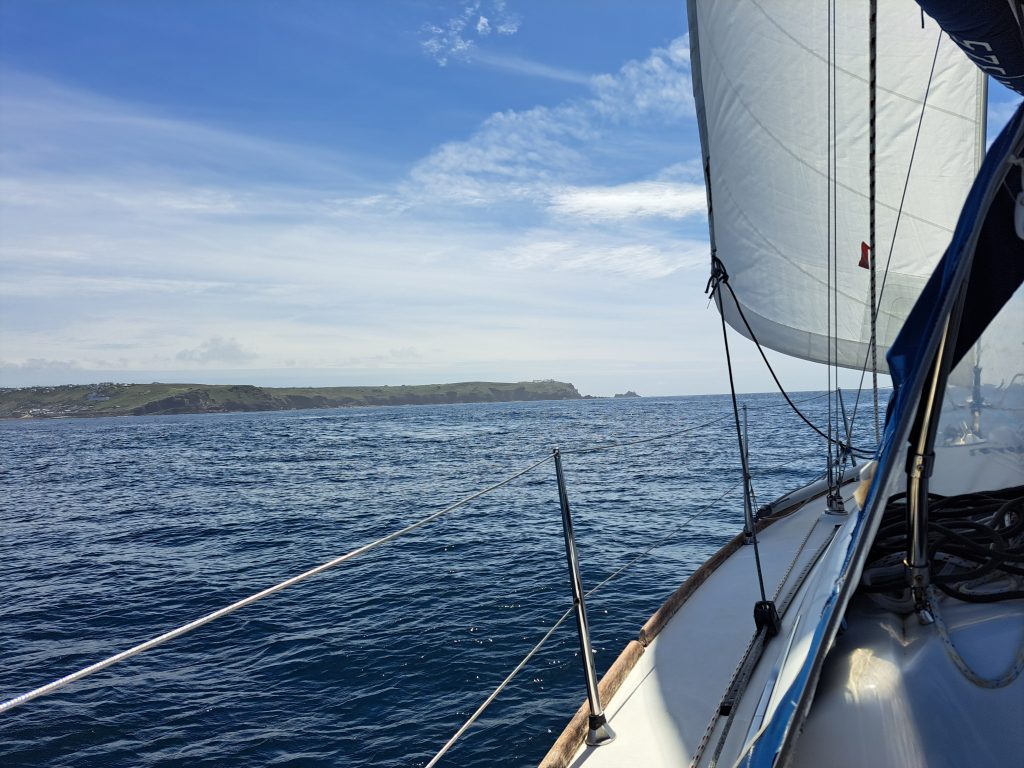
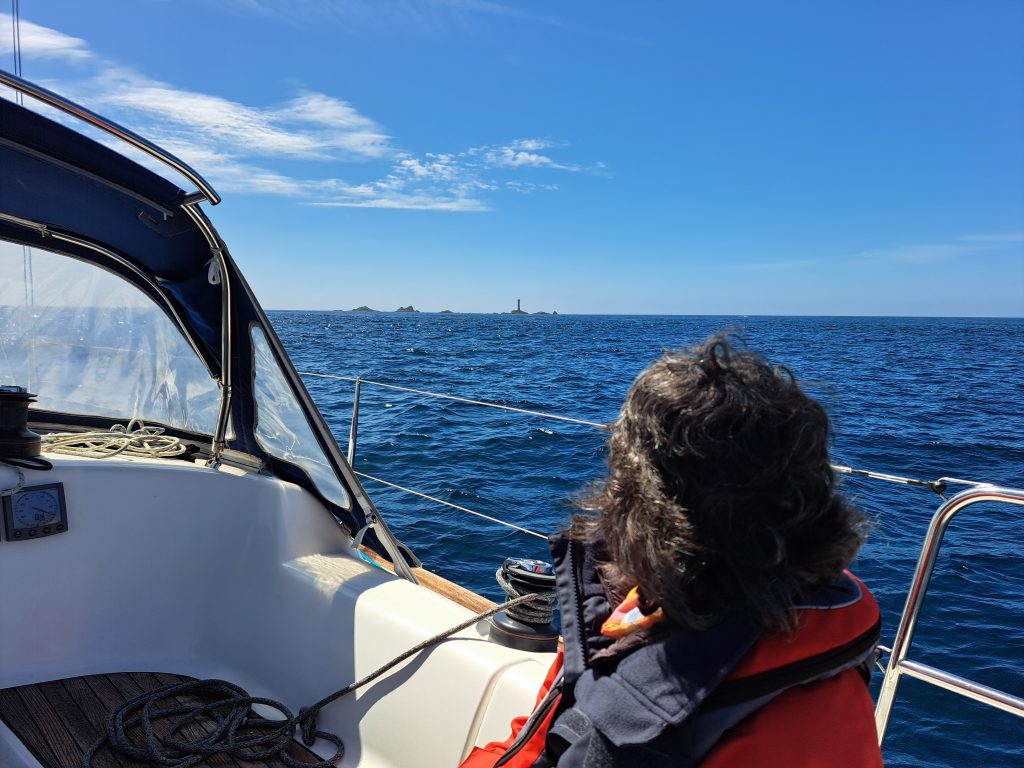
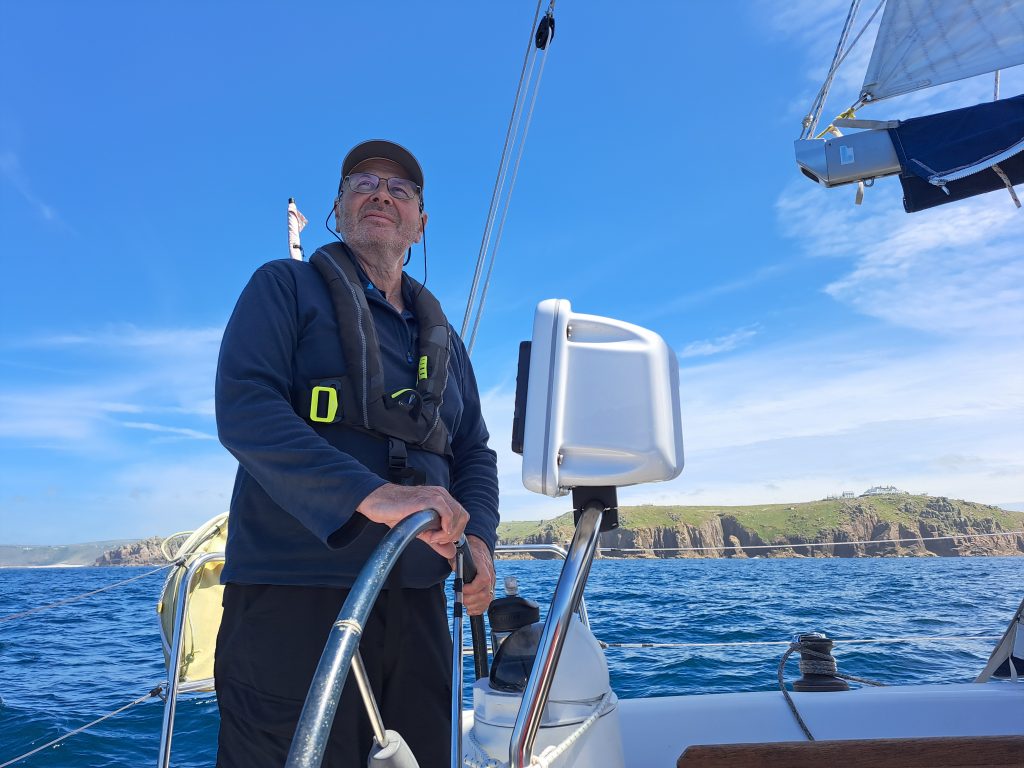
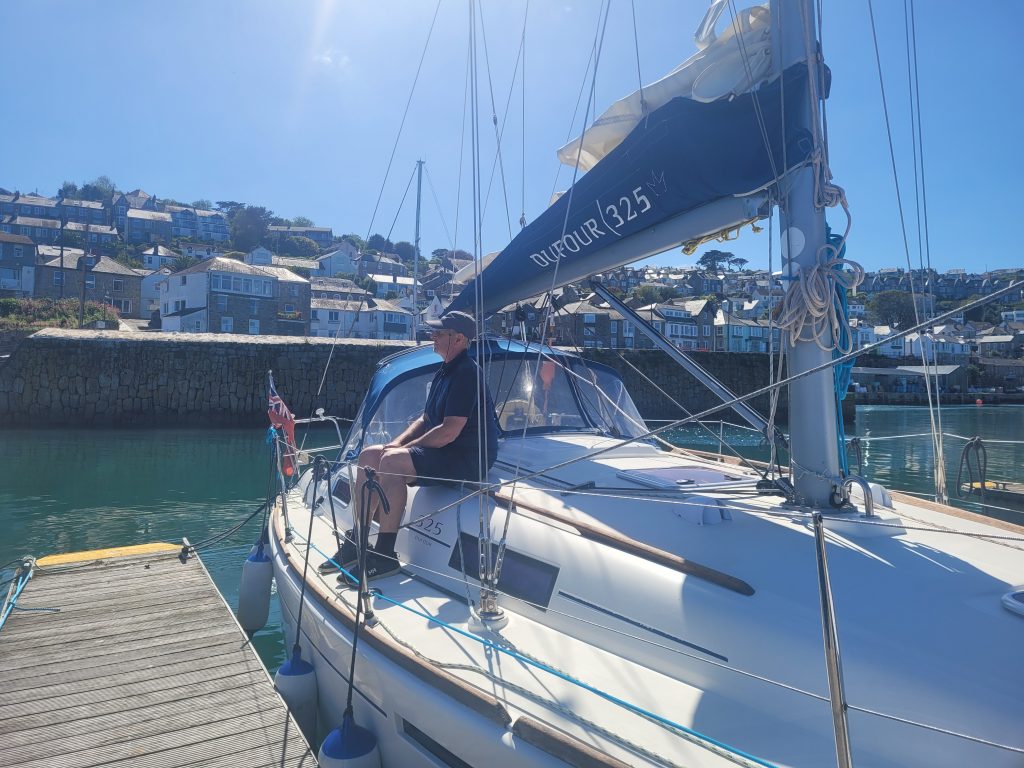
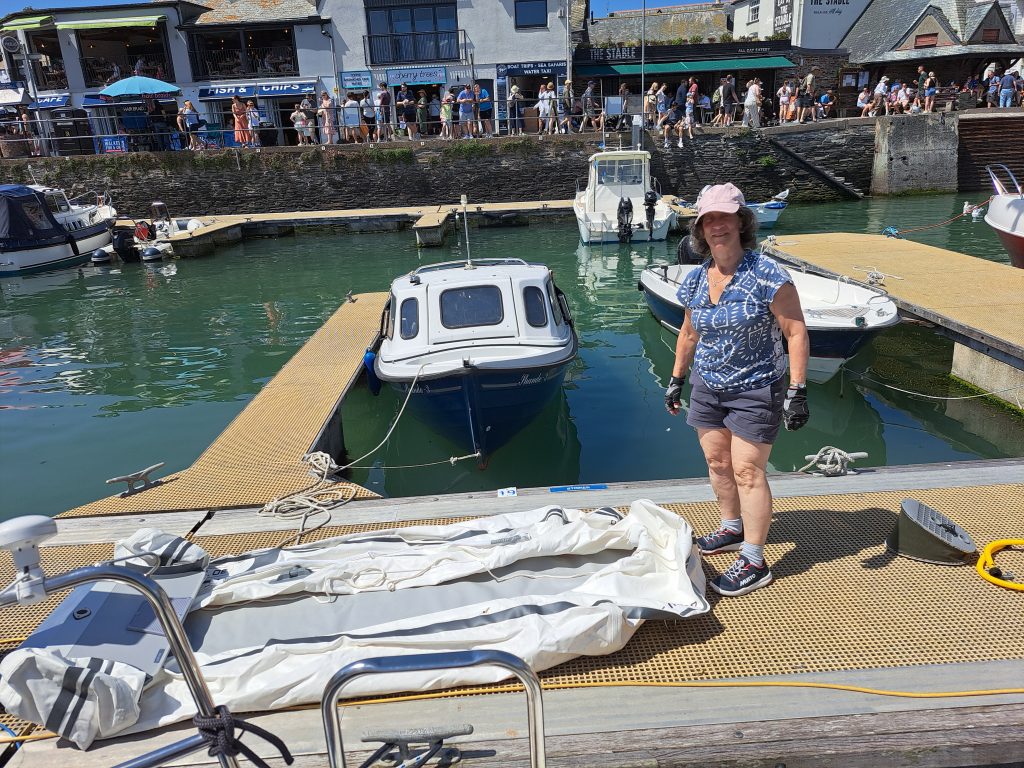
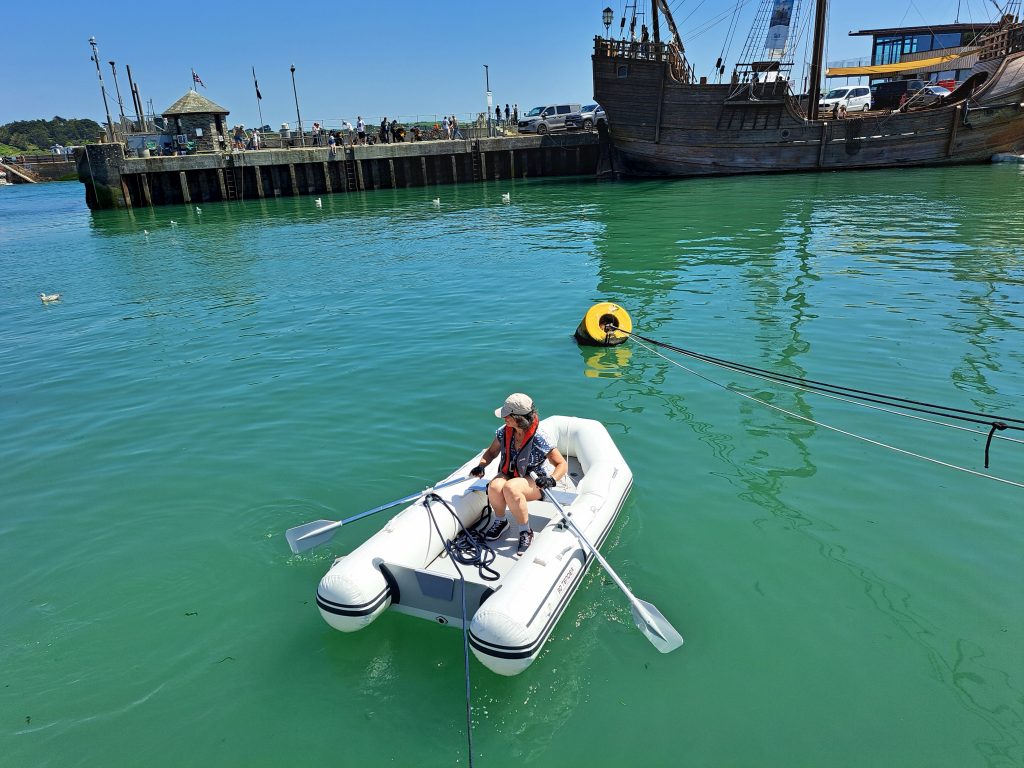
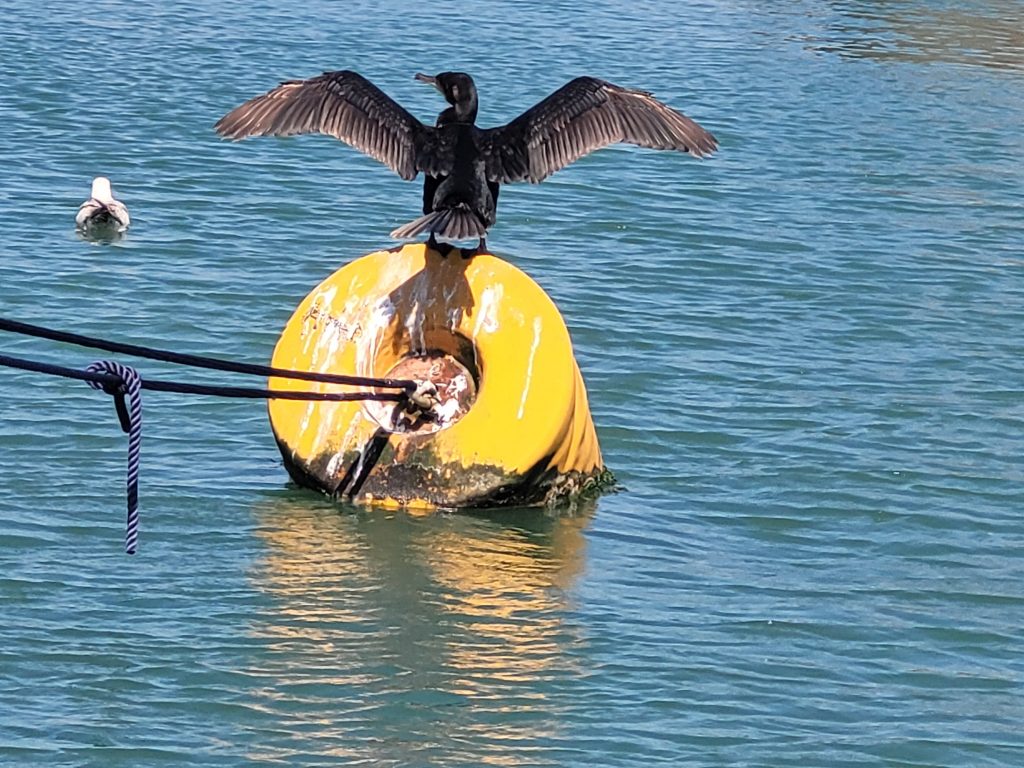
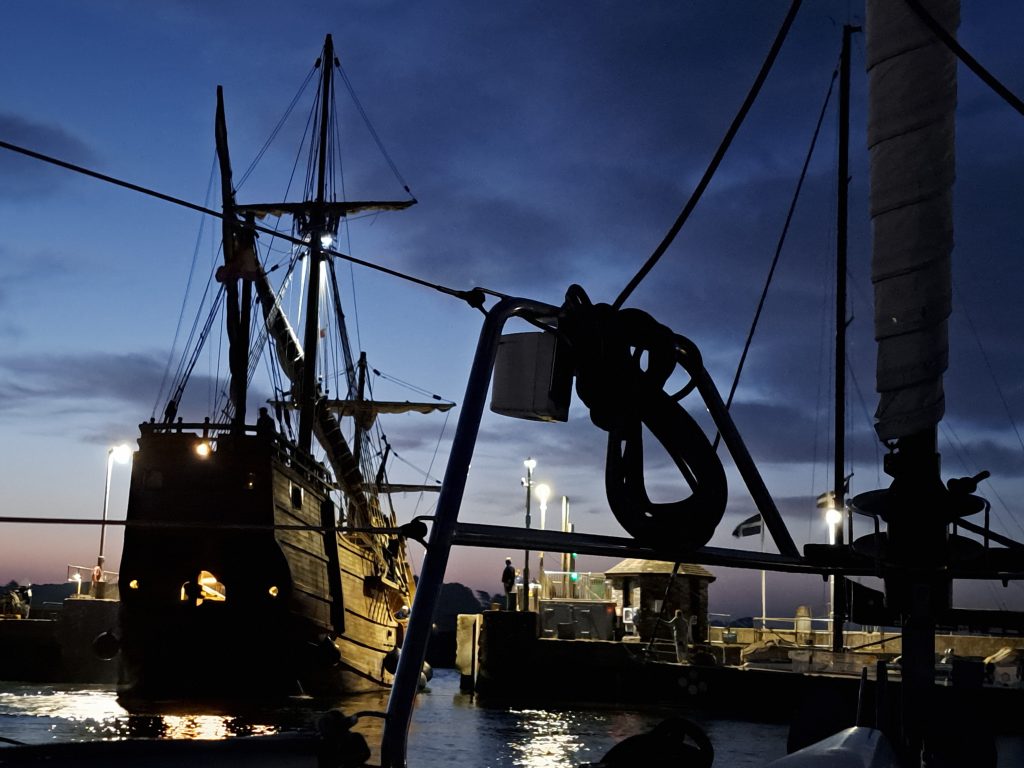
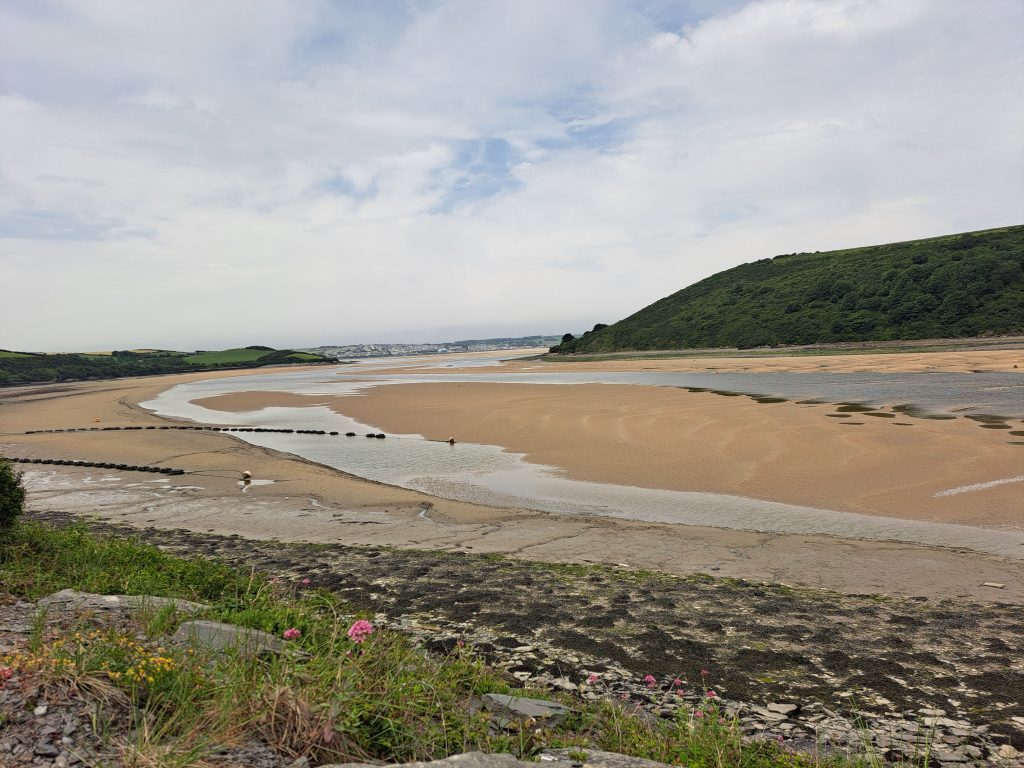
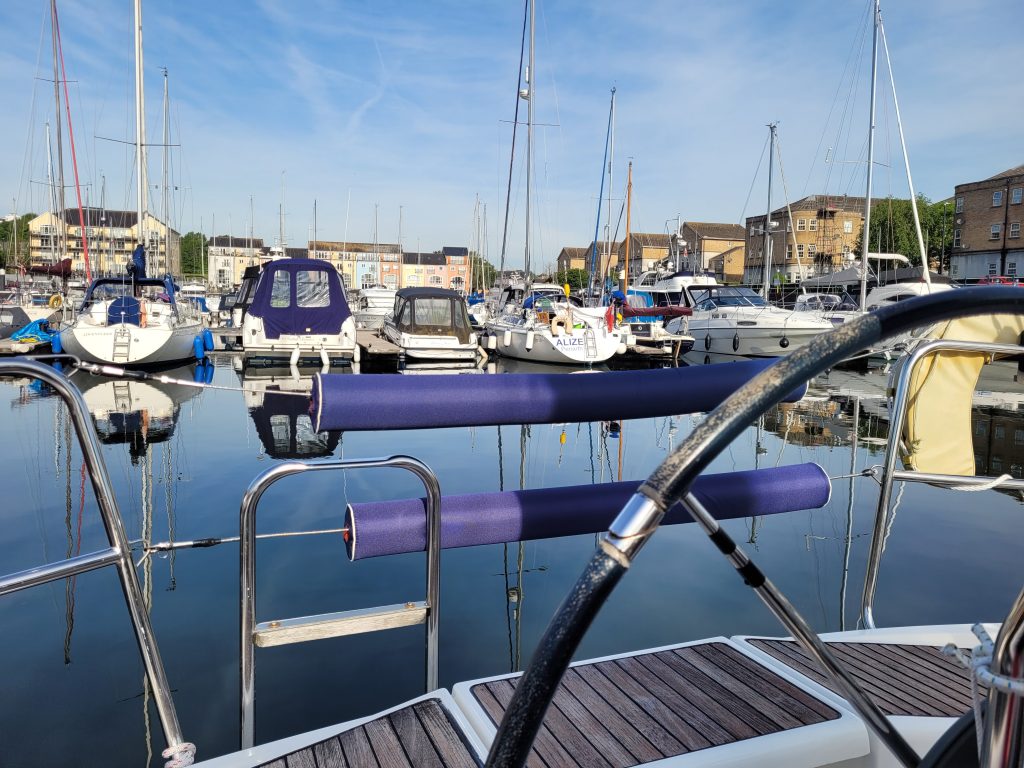
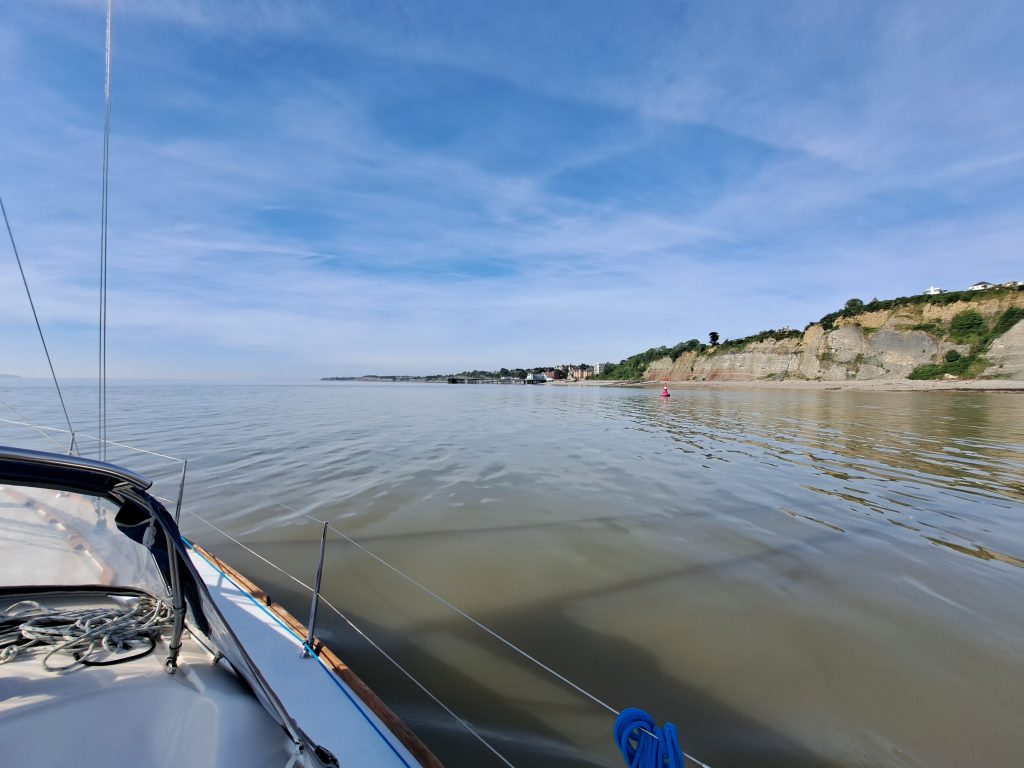
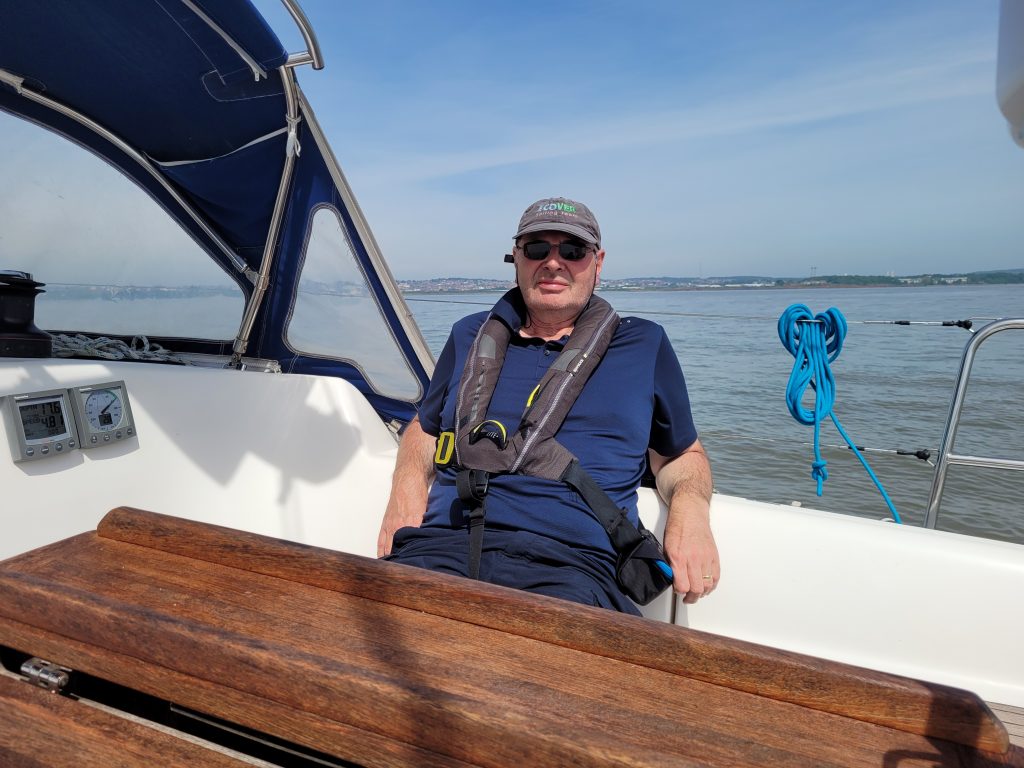
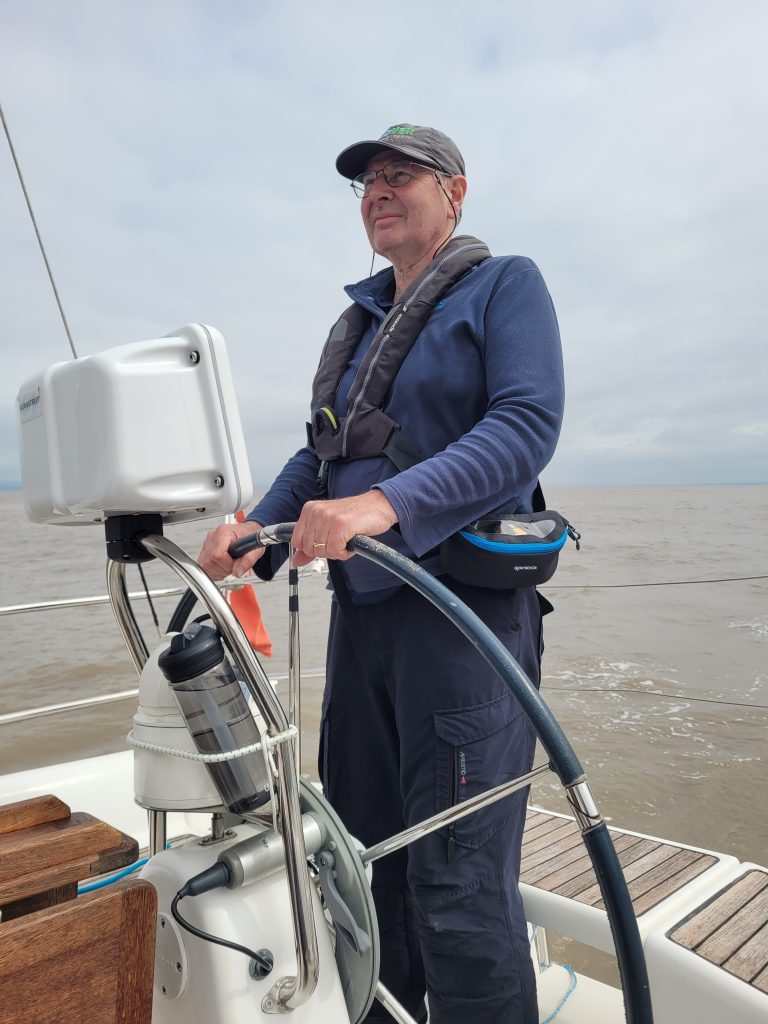
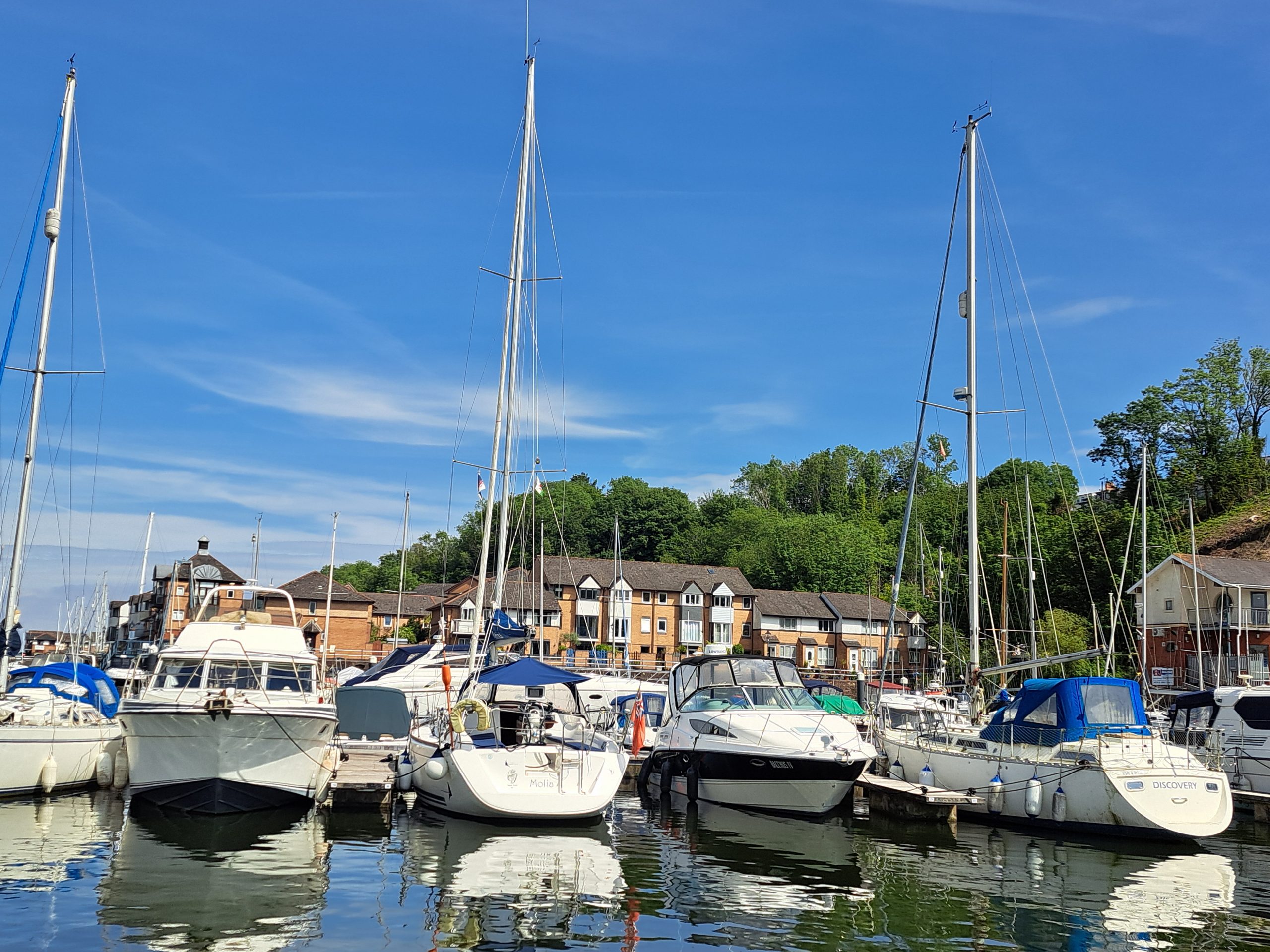
At last it was time to leave and make our way back 80NM to Swansea. As this was 7 days after we arrived, the tide had moved around to the early morning – so we left as soon as the gate opened at 0430 – it was just daylight!
This was a pleasant trip with wind and swell behind us. But there was a spring tide against us for the first part of the day, so we avoided the Hartland Point tidal gate and set our course close to Lundy.
We arrived back at the Tawe Lock in Swansea at 1830, just before high water, and the lock was on free flow.
Now on our way back, we spent a few days in Swansea in better weather!
We walked on the coast path around Oyster Bay from the docks to Mumbles Head.
After our stay in Milford our next leg was 77NM right across the mouth of the Bristol Channel to Padstow. We left Milford an hour after low water, at about 0630, planning to arrive in Padstow Bay just about sunset and therefore around 2 hours before high water which was at 2333. The gate at Padstow is open at the very earliest 2 hours before high water.
The grey skies at the start of the day soon turned to blue, and the sea became a bright azure that I am sure rivalled the colour in the south of France. We saw puffins nearer to Wales, and then dolphins on and off all the way to Cornwall.
With a light wind directly behind us, we motor sailed, making good progress. But in the end we went too fast! At about 1830 we cut the engine and drifted the last 10 NM into Padstow Bay. You can wait for the tide in the bay by anchoring behind Stepper Point if the wind is in the right direction. This requires great care as it is over the notorious Doom Bar sandbank, and it is often a rolly anchorage. We prefer not to anchor here, and anyway today the wind (such as it was) was blowing directly into the bay.
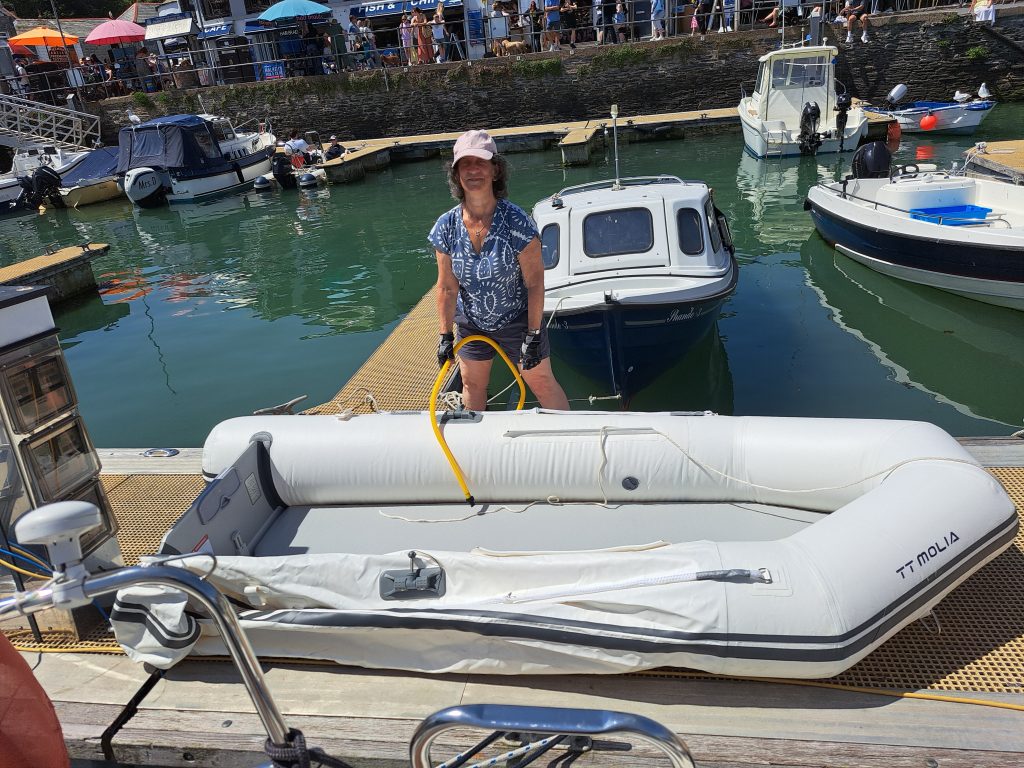
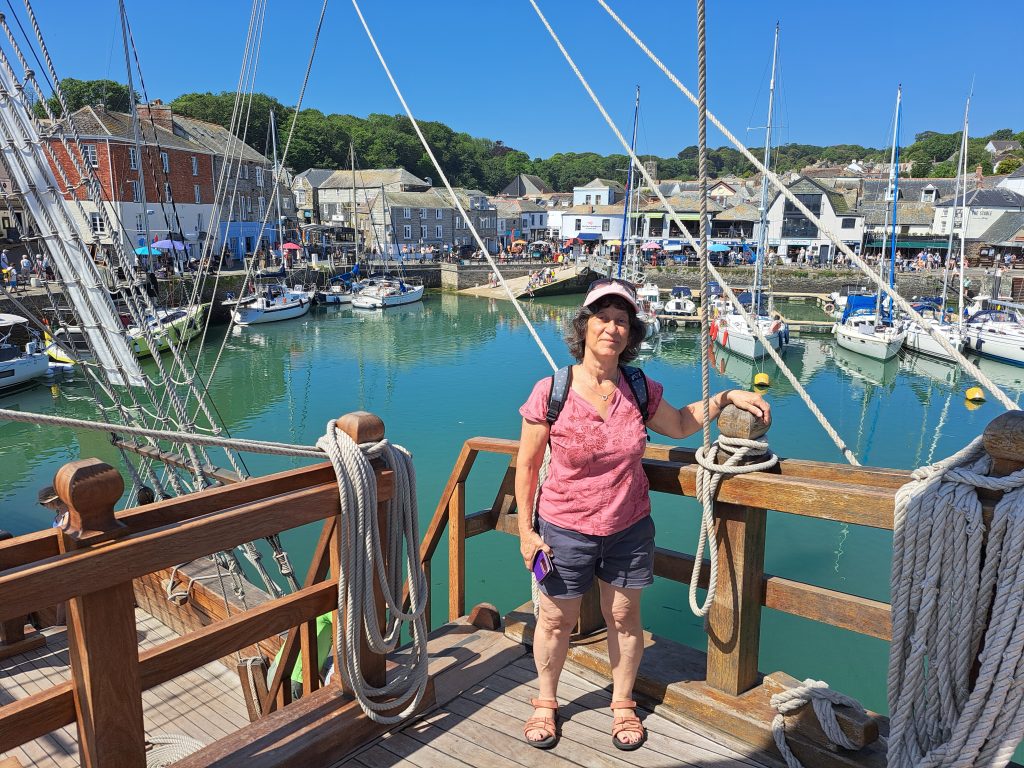
On today’s neap tide the harbour gate opened promptly just after 2130, and we made our way up the River Camel with a small group of boats.
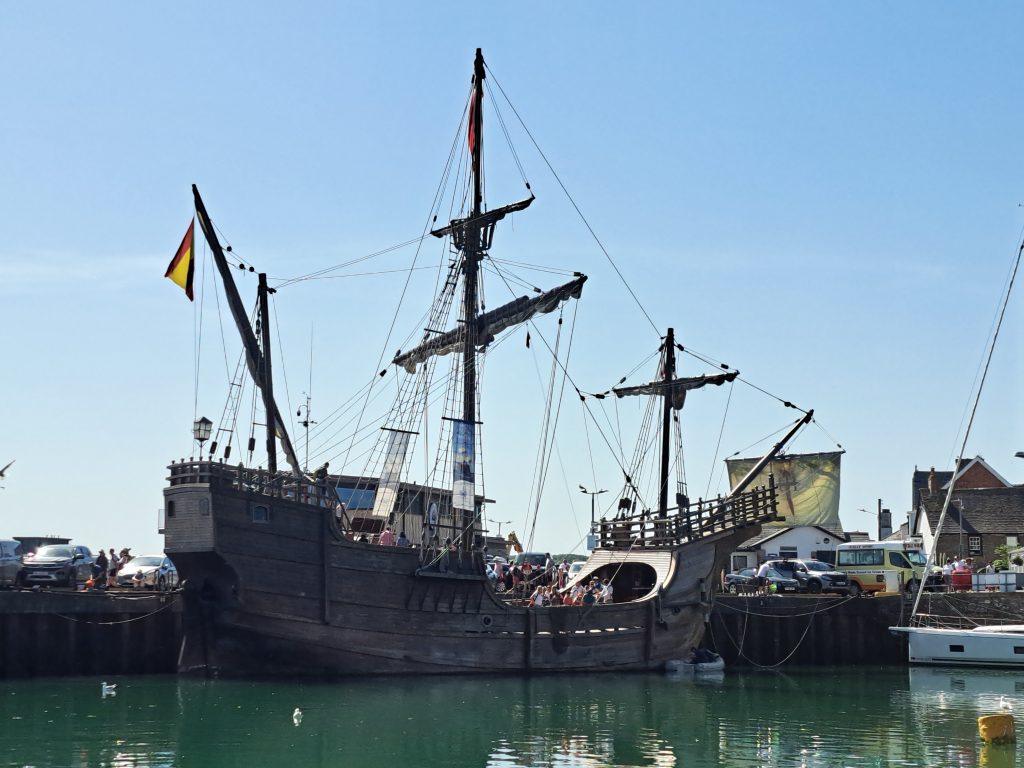
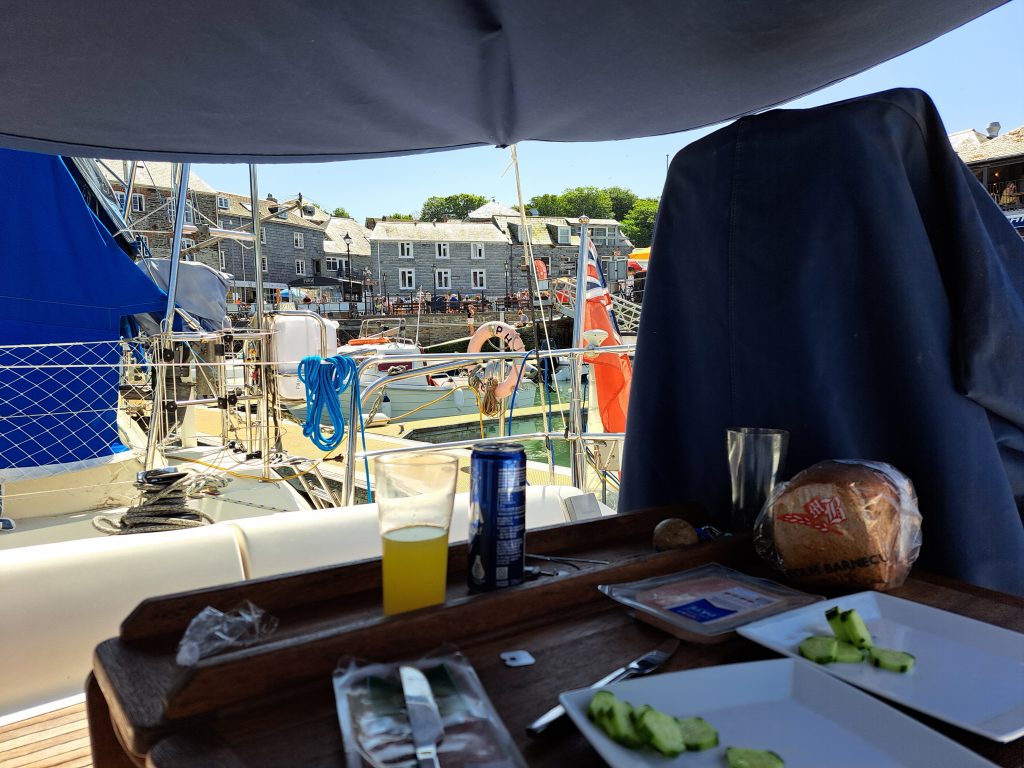
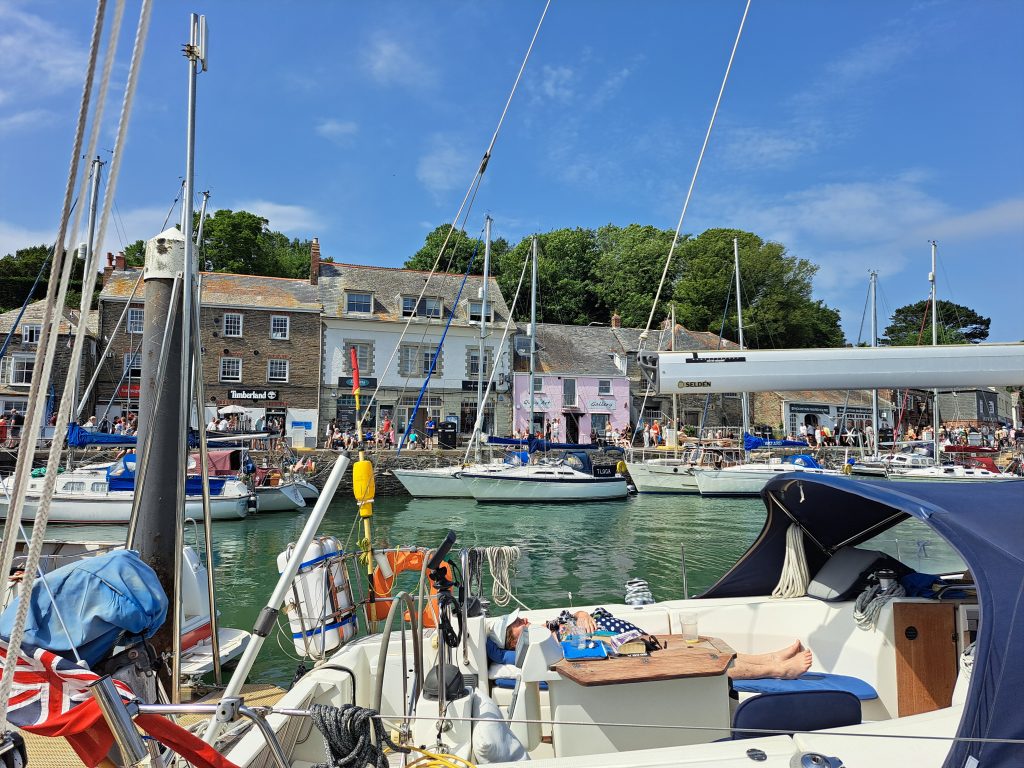
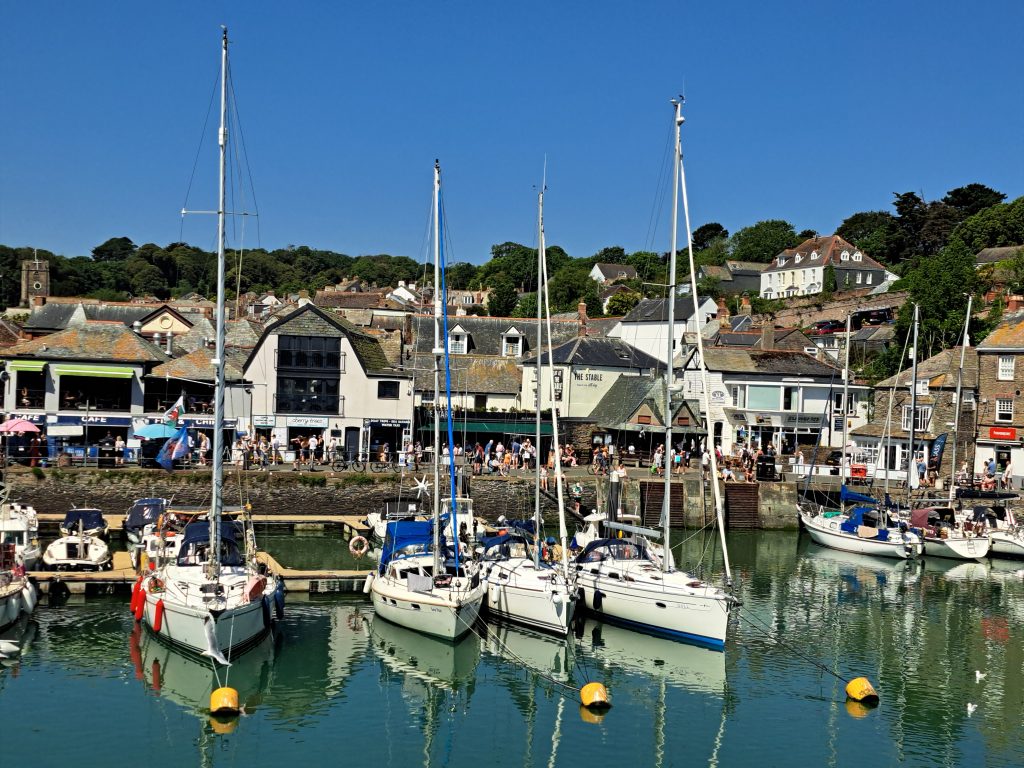
It is always a great pleasure to wake up in Padstow Harbour; it is the natural centre of the town, and there are lots of shops and places to eat. In the daytime the harbour sides swarm with land visitors; but they do not arrive early in the morning, and have left by the night – so then we have the place to ourselves.
We spent a week in Padstow, swam in the sea over Doom Bar and walked north onto Stepper Point to visit the day mark and National Coastwatch Institution (NCI Padstow) lookout.
We also walked east on the Camel Trail to Wadebridge. This path follows the river on a disused railway, and is part of the national cycle network – so there are a number of bike hire places if you prefer to cycle.
Footnote
We did find that this year the Padstow Harbour building is currently being rebuilt – this halved the number of bathrooms, but it was not a problem. It will look great when its finished, and the facilities for visiting yachts will be improved.
Next up: 57NM to Milford Haven. As it was a neap tide, we left Swansea just half an hour after low water and we were fine. It started to rain a couple of hours into the trip.
As you can see from the sketch chart, just off Tenby we had to curve around the military firing zone (which is active most weekdays) before heading in.
It is probably worth factoring this in immediately after rounding the Gower; I think making a more southerly course across Carmarthen Bay would save distance later.
Access to Milford Haven is at all states of the tide – but take care in the approach channel at low water springs. The sea lock (Ch.14 ‘Pier Head’) itself has nice new floating pontoons on each side.
We noticed that the advertised waiting pontoon was missing. It had not been put outside the harbour by the time we arrived on 13 June – but we did not need it. We got there around high water, and the lock was on free flow.
We found the missing waiting pontoon – it is up at the end of the marina!
It was great to stay in Milford Marina. It is a friendly place, has good facilities, is right in the town, and there is a big supermarket one street back.
Next, on to Swansea – 46NM with the tide. We left Cardiff Bay an hour after high water, and the fast ebbing tide accelerating us past Barry, to Nash Point (there is a lighthouse) and on towards Porthcawl. The brave (not us) can go landwards of the Nash sandbanks to gain extra speed from the tide; but the rest of us go around them and then also outside the Scarweather Sands further west.
Swansea Harbour entrance has a reputation for being tricky, but take advice from the lockmaster at Tawe Lock (Ch.18) – he is very helpful and will guide you in.
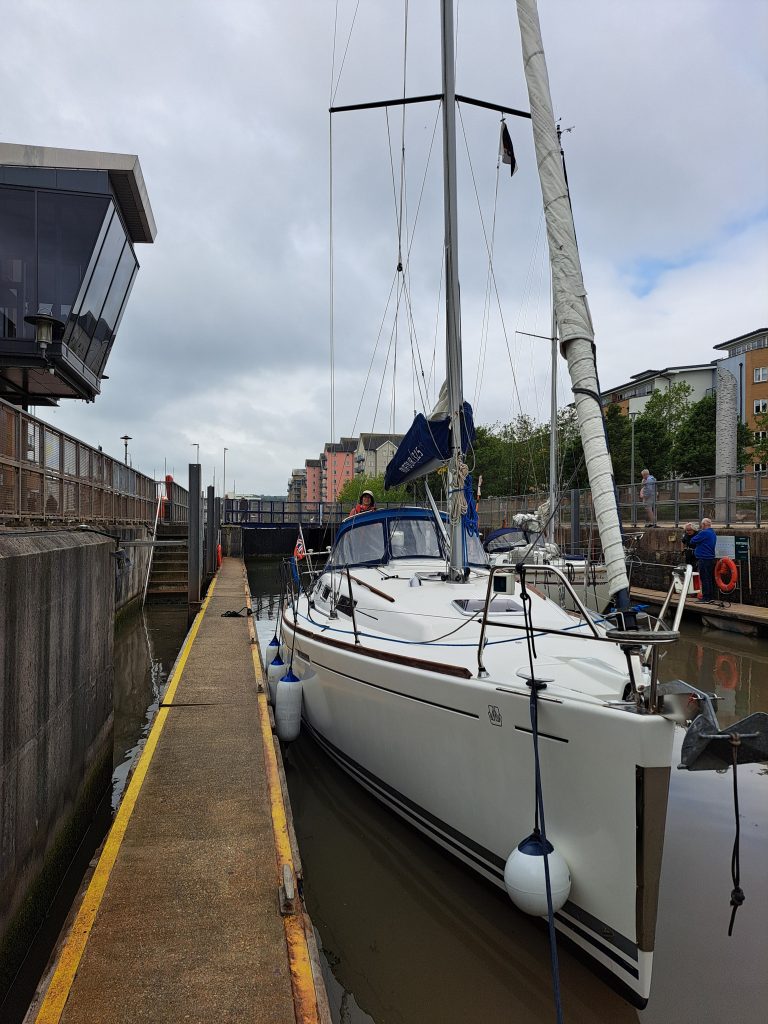
All the Swansea locks have handy grab ropes to make tying-up easier. Once through the sea lock there is a second lock in the River Tawe into the marina (Ch.80) – and then you have to tie up at the marina visitor’s pontoon as well.
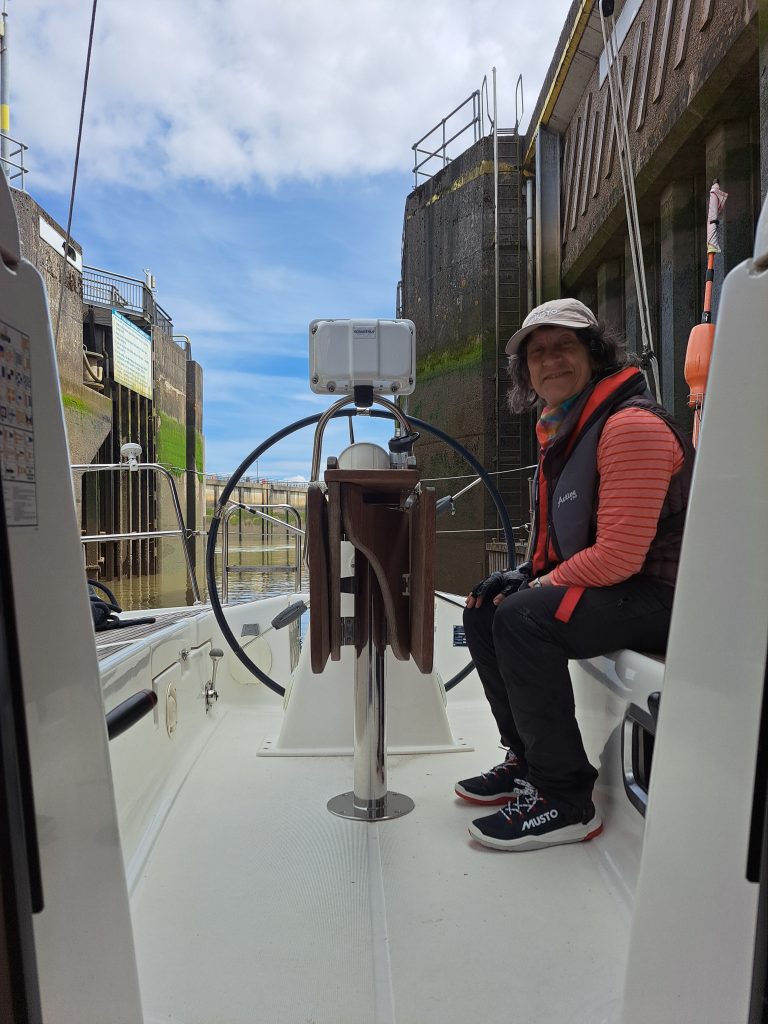
The rain started just outside Cardiff, so I sent Jo down below – there is no point in both of us getting wet! As you can see it was still raining in the lock at Swansea! The rain stopped almost as soon as we had tied up in the marina.
The first leg of our voyage was a short 18NM across the Severn to Cardiff and its Penarth marina. We do this a lot!
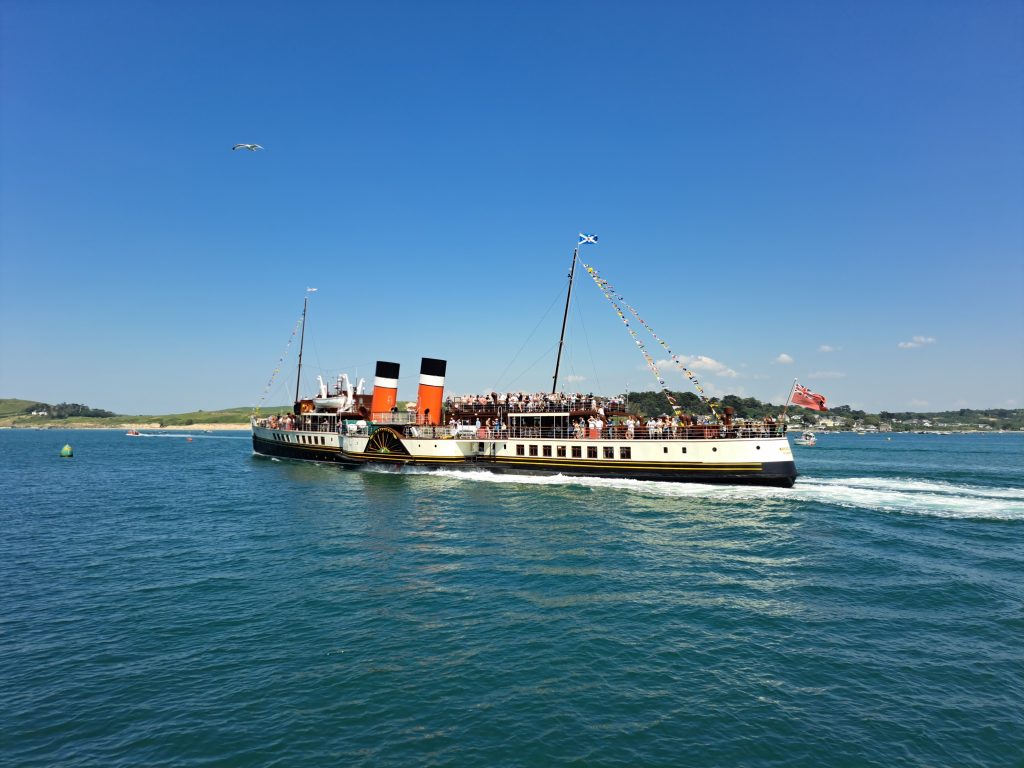
We met the paddle steamer Waverly off Clevedon in Somerset – just getting up steam in the early morning. She is the last seagoing passenger-carrying paddle steamer in the world, and a frequent sight on the channel.
Making use of our new padded rail cushions – very comfortable.
Watchet is a pretty harbour town on the north coast of Somerset. Its harbour has two parts: the outer (above) is run by the council and contains only mud!
The inner (below) is operated by Western Marinas. (Office hours 0830-1630 daily.)
Stories abound in Portishead about what is happening down at Watchet.
Having never been, except to pass through on the steam railway, Jo and I decided to go and see for ourselves.
We were there on a glorious day, so it was looking at its best and we were there for low tide.
This was a trip by car! We wanted to find out how the marina works before arriving on a Severn tide!
We spoke to the marina manager, and I can report that the marina is currently closed.
Dredging is partially complete. The aim is eventually to achieve 1.5m to 2.0m depth.
The centre pontoon is empty because that is their next area to dredge.
The gate is up in our photos; so you can see what it looks like at low water.
But the real problem for the marina is the gate. It is unreliable and can get stuck in its down position, leaving the inner harbour to dry.
The gate is 20 years old and needs a lot of maintenance.
Because of this situation the marina does not plan to offer any guaranteed depth.
The dredging leaves the seabed in the marina with a layer of mud, and this covers a hard bottom. So sinking a keel into the mud is not an option.
So even when it opens (which they hope will be soon) the destination will remain one for boats that can safely take the ground should the gate fail.
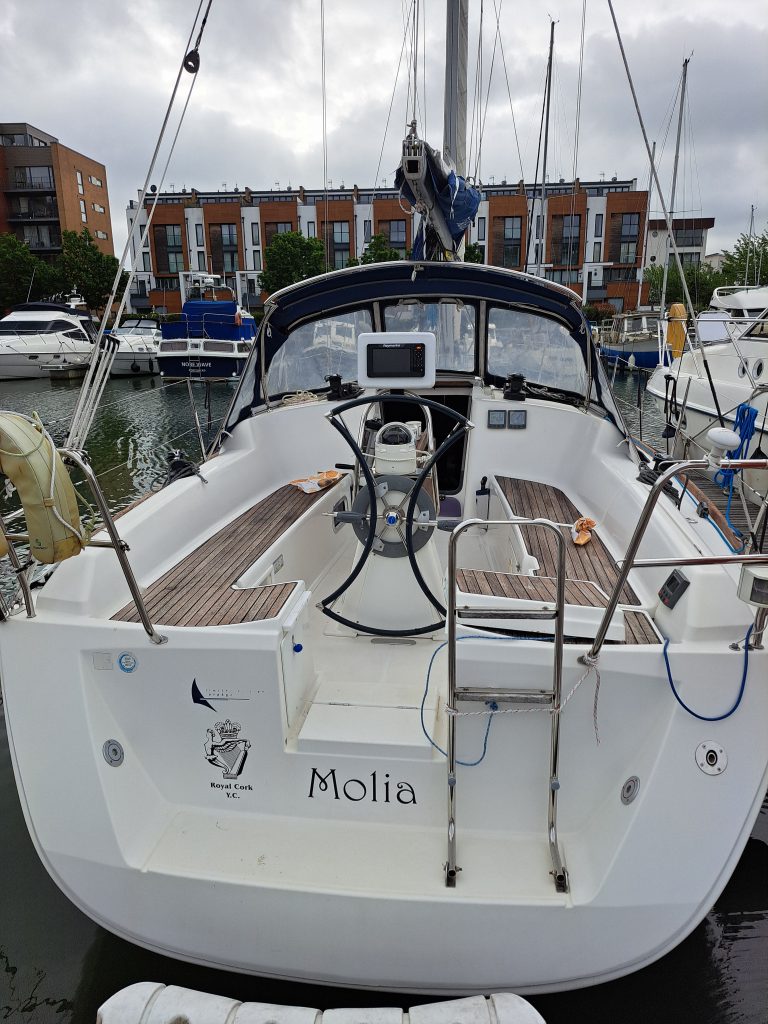
We took Molia to Penarth this weekend to practice an overnight trip with all the maintenance done for the 2025 season. We were happy to welcome Niv and Steve onboard for this first trip outside Portishead of the season – that is a bit of a Molia tradition.
A great Welsh Beef burger on Saturday evening at the new Goose on the Loose restaurant (previously ‘The Deck’).
We had an early start on Sunday for the 0700 lock. The 10 knot NE politely added some north as we came up past Clevedon
We planned maintenance on the (Quick Nautica 20BX) boiler in Molia this season because it has been making scolding hot water! This included: checking the element and its anode – did you even know there was one in there? Then checking the cylinder for scale, and adding the thermostatic valve kit from Quick to keep the hot water temperature reasonable.
Step 1 – Drain or switch off the water tank, undo the electric connections, boat disconnected from the mains obviously! Then disconnect the water and engine coolant, and remove the boiler from its holding straps.
It will be still about a third full at this point, and heavy. On Molia it only just fitted out through the locker with the cover off. (The locker cover is also the double saloon bunk base.)
Step 2 – give the locker a good clean!
Step 3 – empty the last water out. I removed the boiler to my workshop to make the next few steps easier.
Note that I had to cut the engine coolant pipes off just at the ends of their connectors. This was because they had fused on over the years! I removed these in the workshop.
Step 4 – With reference to the diagram (below, left). Remove the cap (12) and electrical connections (11,14), and then pull out the thermostat (10). The supply wire earth is attached to the cylinder earth post with a nut and washer (13,14,15). The thermostat itself is not attached with any screws – it is just clipped into the element head.
Step 5 – Getting the element out! This looks easy from the maintenance diagram in the Quick Manual (above, left), but it is not! You will need a specialist 55mm element spanner (above, centre) as the element head is recessed into the top of the cylinder.
Our old element is completely missing its anode (above, right, foreground) and there is scale and corrosion around the anode stub and the main element thread. It is possible quite cheaply to replace the anode alone; but due to the age of our element, and the scale and corrosion, I decided to replace the entire thing.
The element rating is moulded on its end – ours is 1200W. Thanks to Force4 for their fast supply of a replacement element (above, right, background).
I inspected the inside of the cylinder itself with a torch, and it did not show too much limescale. So I just washed it out a couple of times.
Step 6 – refitting the element. Don’t be fooled if the element kit contains two seals. Check the old element connection – it either uses the O-ring or the gasket supplied, not both. Ours uses the gasket. Tighten the new element into the cylinder.
Step 7 – Fitting the thermostatic valve kit – again not as easy as the diagram suggests! The threads on the cylinder’s hot and cold water connectors are aligned so that the valve (1) and T-connector (5) finish up pointing away from each other when fully tightened. This makes the supplied flexible hose way too short.
I solved the plumbing problem with a speedy trip to Screwfix, for a longer hose and extra male hose connector.
Step 8 – reconnect the water. Back on the boat, the push-fit pipes were easy to reconnect without any leaks. The new brass connectors were much more difficult to get leak-free – they needed both (don’t tell your plumber) PTFE tape and jointing compound! Leak testing needs the water filled up again (or turned on), and pressurised.
The engine cooling pipes, reconnected with their jubilee clips, proved to be leak-free first time when tested.
It was at this stage that I reattached the cylinder’s holding-down straps.
Step 9 – reconnect the electricity and replace the plastic cap over the end of the thermostat. With the water and electricity back on, check the element heats the water.
Step 10 – check the engine coolant level. Depending on how much coolant was lost during disconnection and reconnection of the coolant pipes at the cylinder, it may need topping up. Run up the engine so that the coolant is pumped through the cylinder to check for leaks. Stop the engine and allow the coolant to settle, check the level again.
Before (left) and after (right) showing the installation of the thermostatic valve kit, and everything else connected.
A note on electrical safety: depending on your experience and qualifications, you may want to employ a professional for the electrical connection and checking steps described here.