Thanks to Anna for taking the pictures.
Travels and boat care
Thanks to Anna for taking the pictures.
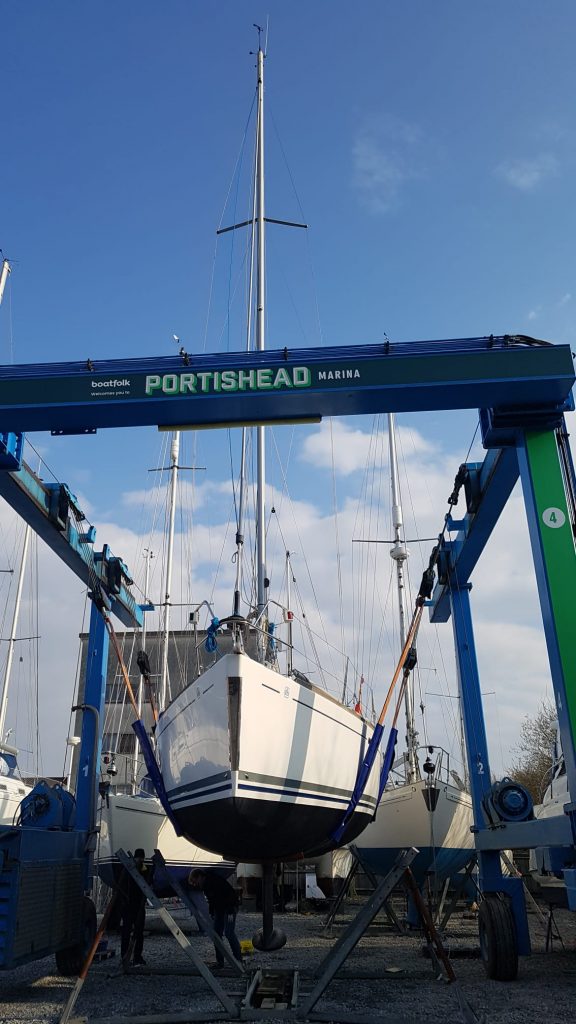
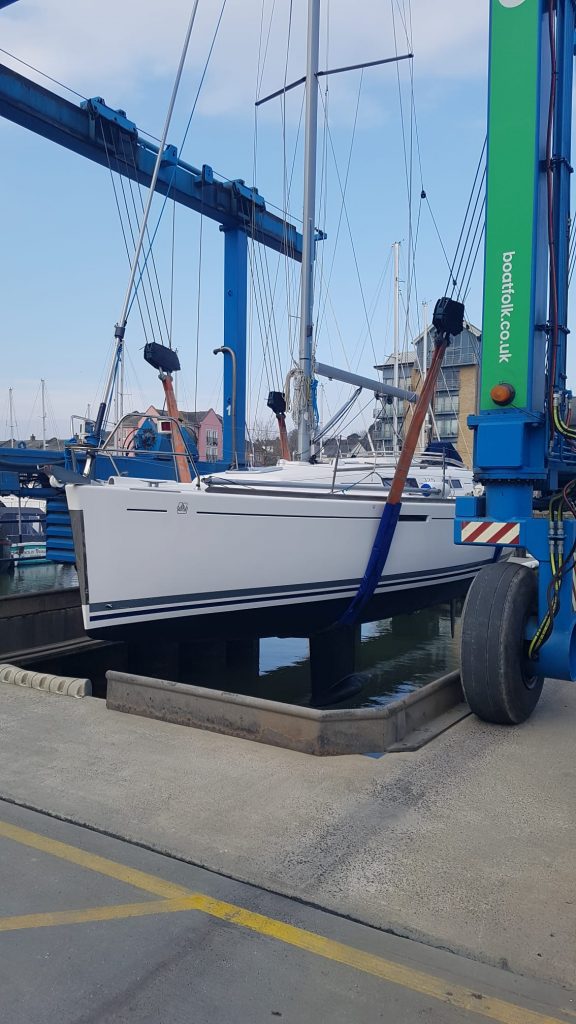
This voyage is on land!

Jetting-off Molia after lifting out. There was not a lot of fouling – the Hempel Cruising Performer antifouling paint seems to work quite well.
Day 10 of our return home from Portland. This was my first solo sail on Molia although I had some help – there was someone there to help me tie up in the Cardiff Bay Barrage lock, and Steve met me in Portishead lock.
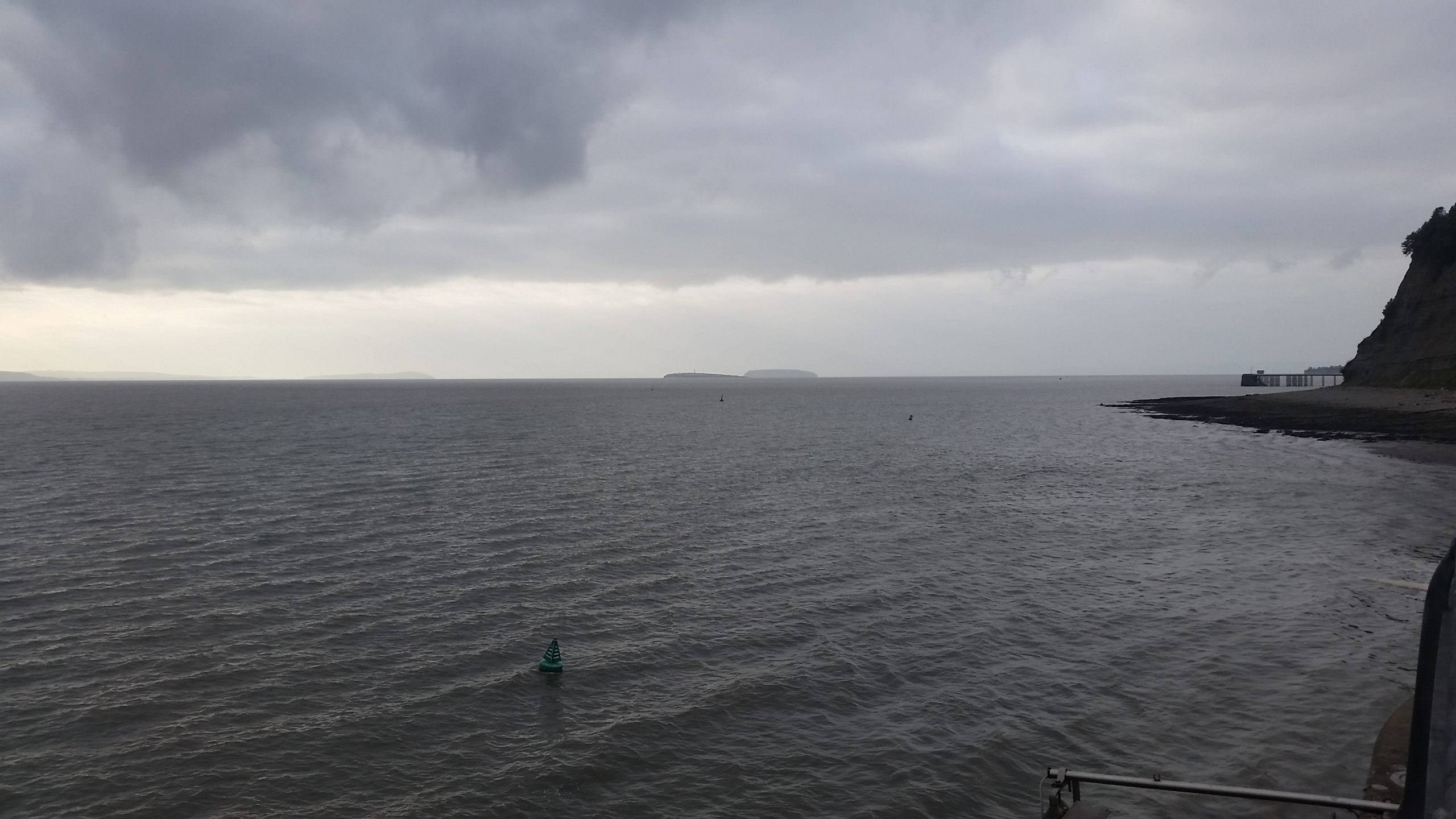
Outside the Cardiff Bay Barrage it is difficult to see what all the fuss was about yesterday!
I left in the 1100 lock.
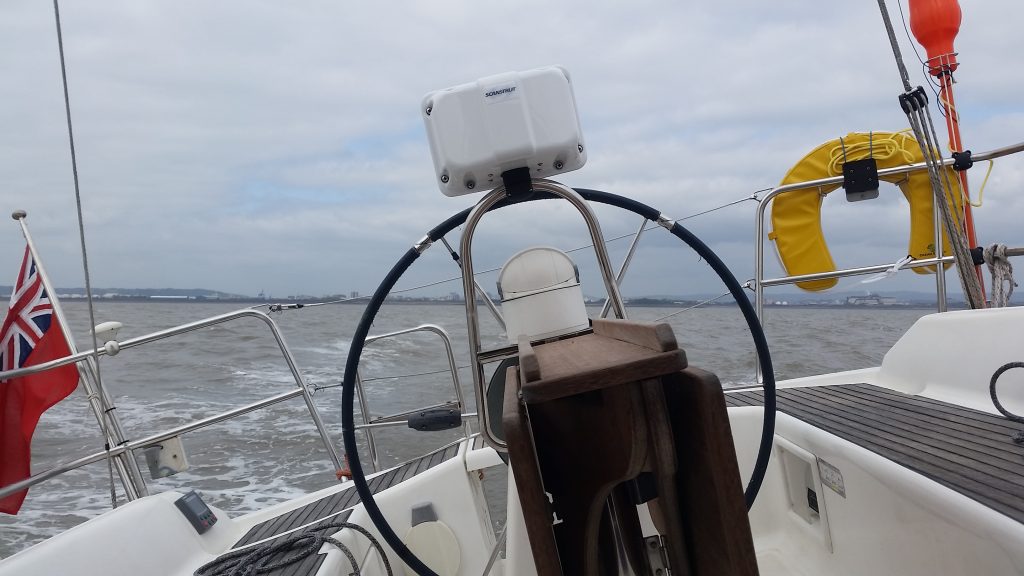
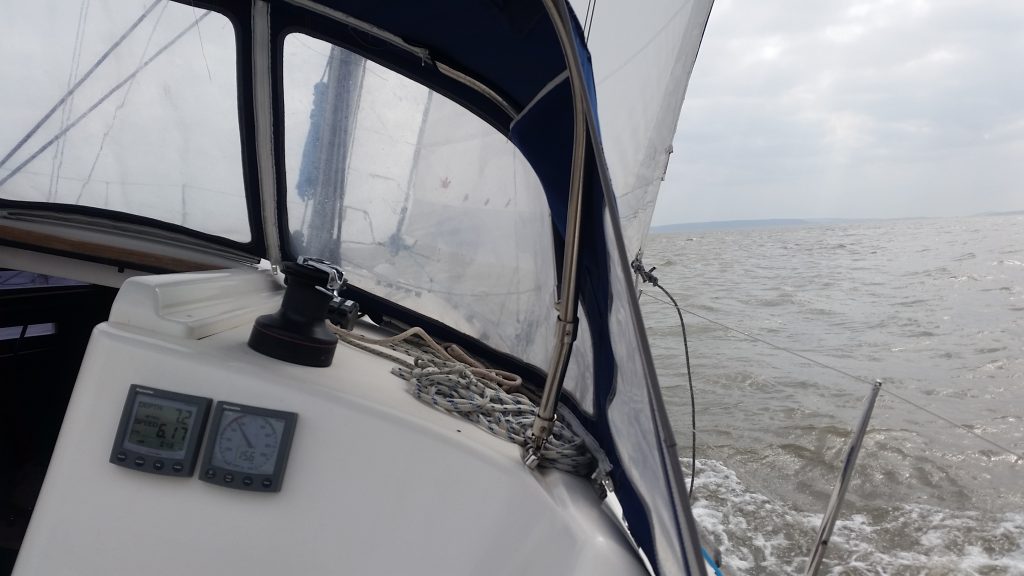
Towards the English side, the wind dropped, so I took the sails down and motored the last bit. Many thanks to Portishead Marina for holding the lock open for 5 minutes so I could just make the 1415.

14:58 Molia tied up in Portishead.
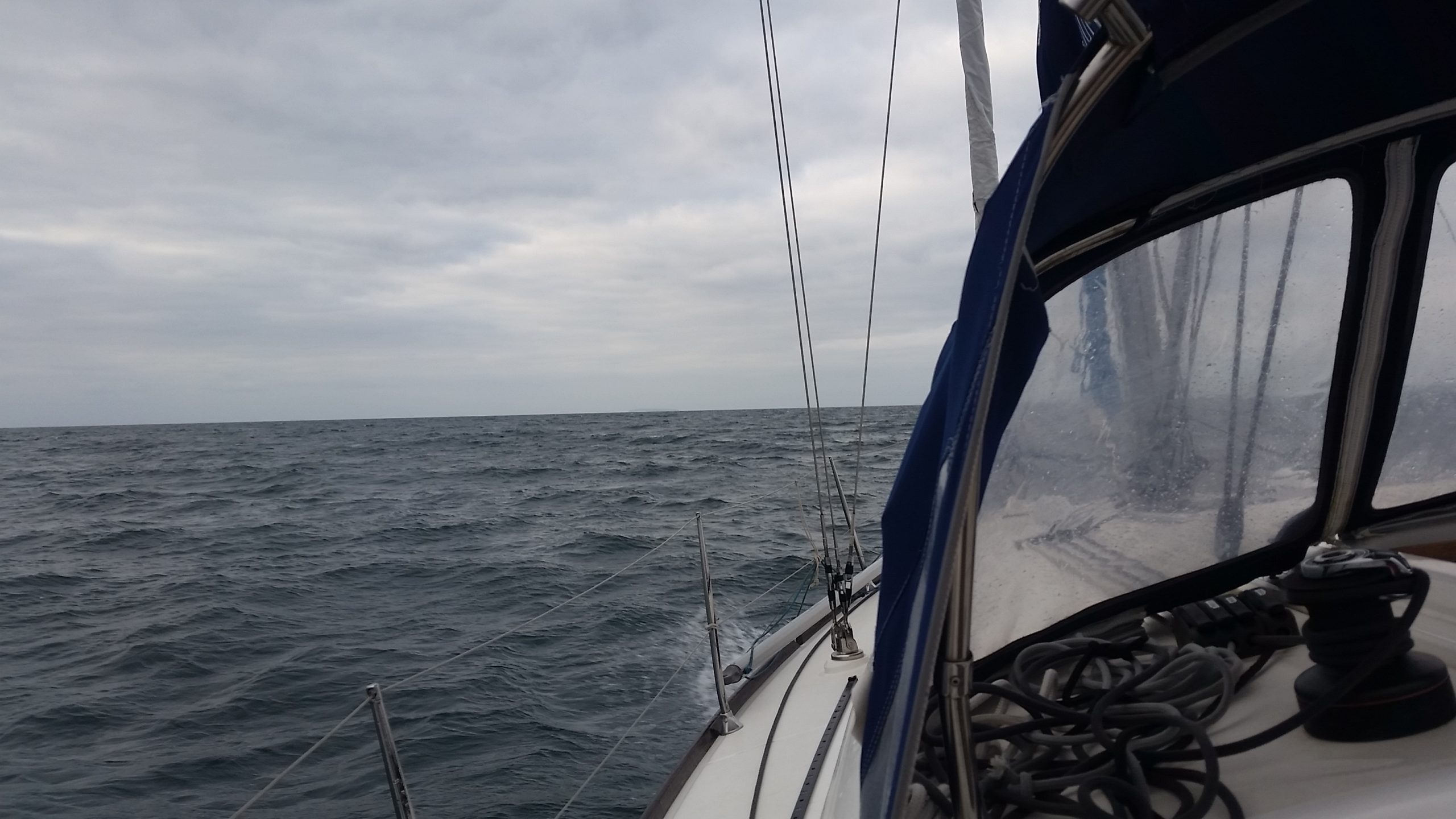
Mike and I left Padstow at lunchtime; and the sailing south of Hartland was about what we expected.
Our evening was enhanced by sailing with the dolphins.
North of Hartland it became a tough sail. We had 16-24 knots on the nose, the waves were against us, and had that typical Bristol Channel shape: frequent and steep – although not that large. The conditions were definitely worse than advertised on the weather forecasts, and we had to tack to prevent the waves from slowing the boat.
After a fairly uncomfortable night, things did not improve around Porlock.

Hats off to Mike for helping – it was his first passage of this sort of length!

Day 9: After 24 hours we called it a day and went into Penarth.

We made an early start and were around Land’s End by 0900. We followed our outbound track inside the Longships as conditions were good.
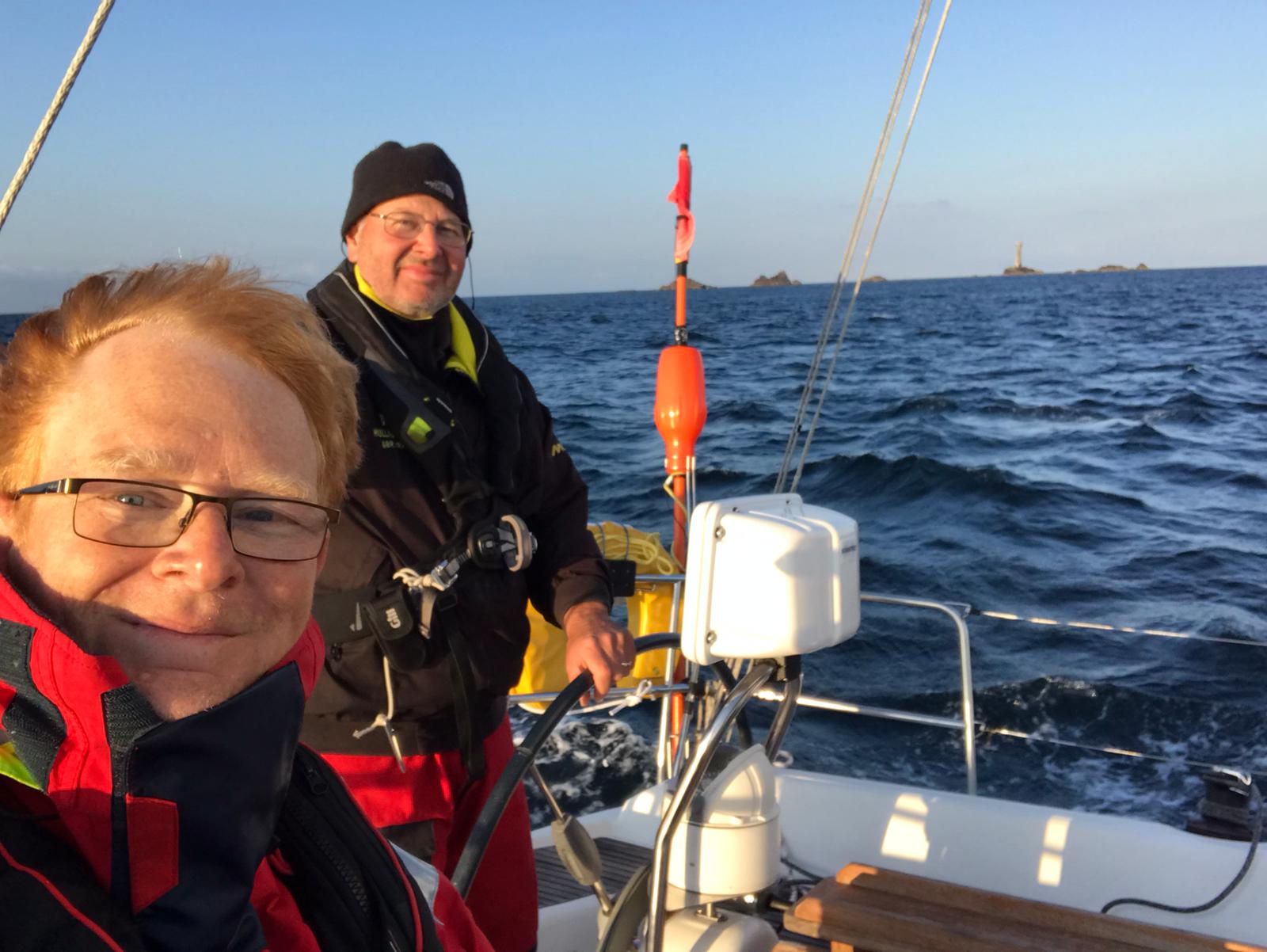
Conditions were more difficult once we had to face the NNE wind and waves up the west coast to Padstow. We had to tack the boat to prevent us being stopped by the waves, and this lengthened our day from 11 to 13 hours – so we were glad to round Trevose Head and reach Stepper Point.
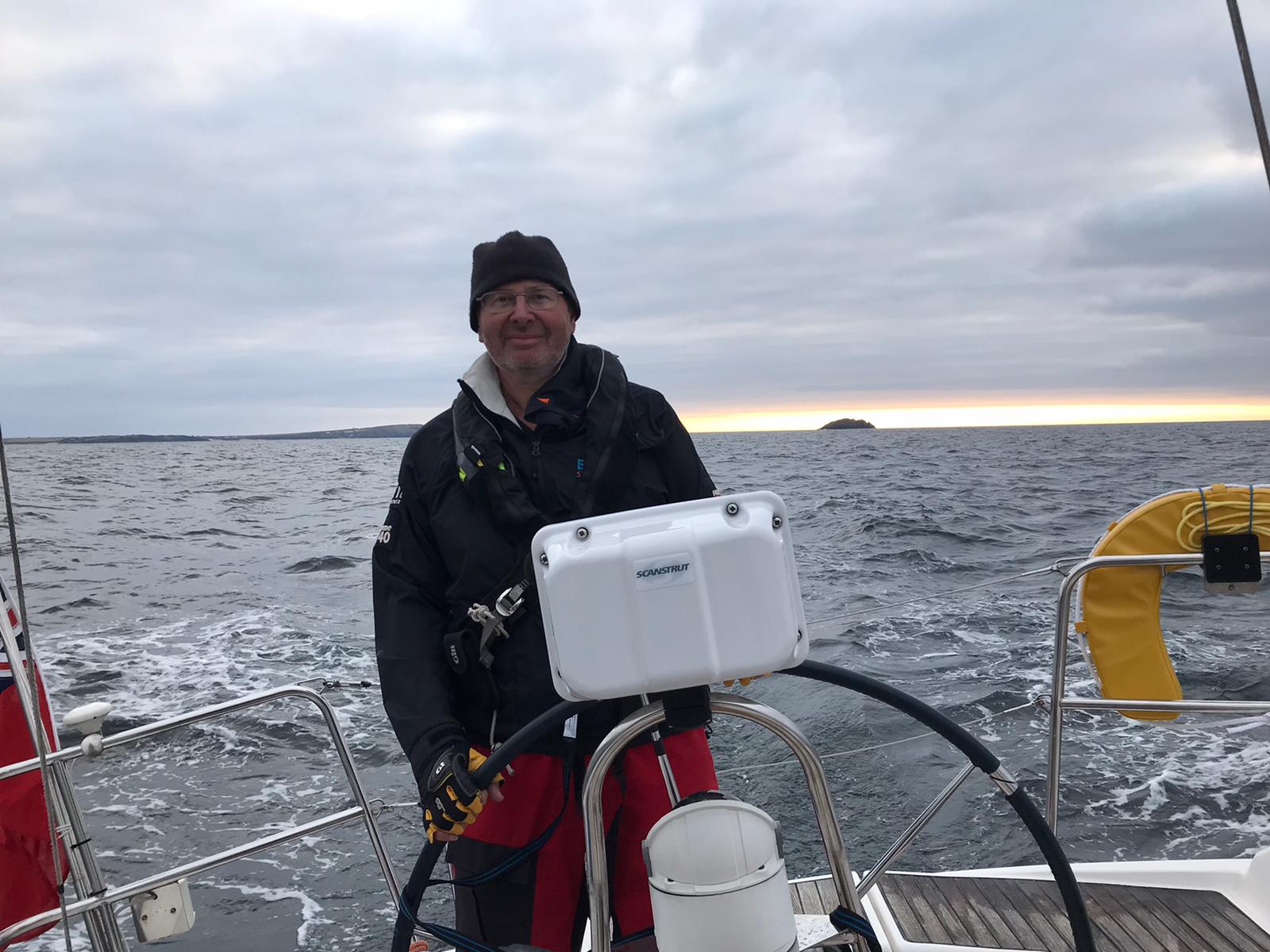
As the tides were neaps, we had plenty of water in the river, so we went up the river to the anchorage opposite Saint Saviour’s Point (near where the channel to the town starts) and dropped the anchor for a rest, and to wait for high water.
I am very pleased to have helped Tim achieve one of his bucket list items – to sail round Land’s End.
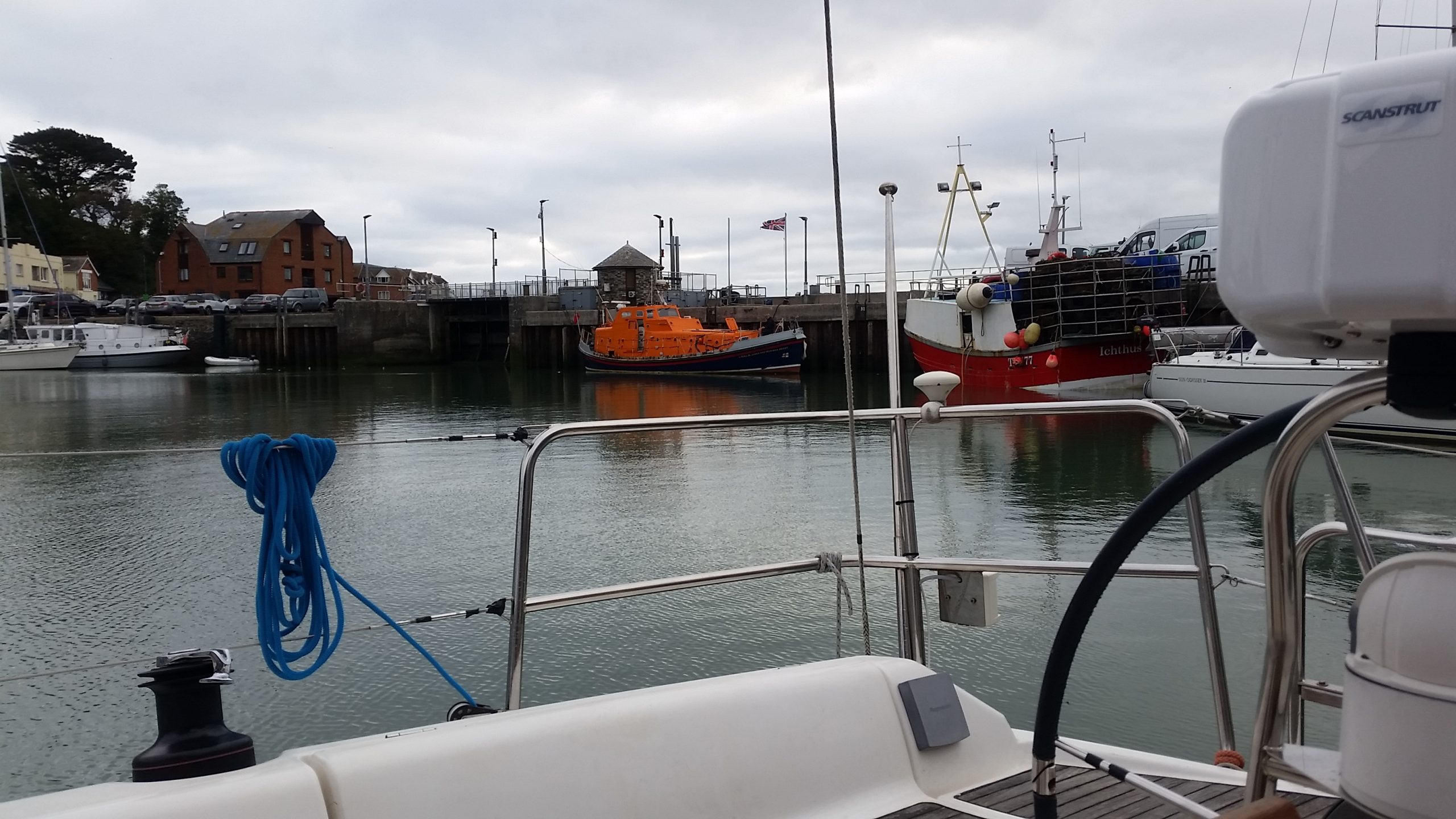
We had a well earned rest – as well as a couple more pasties! We changed crew in Padstow, with Mike replacing Tim for the final legs of the passage.
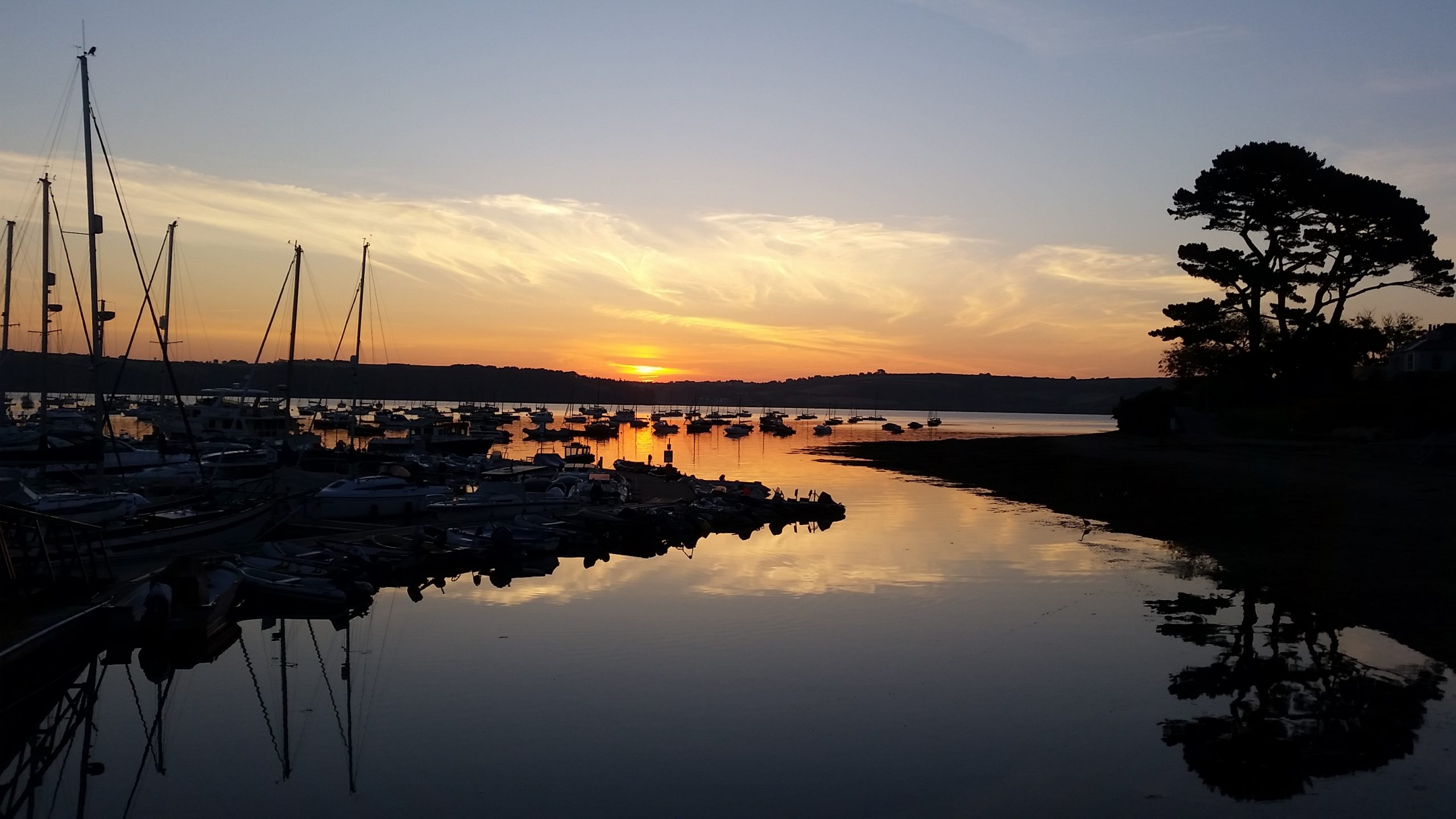
We had a quick look into the Helford River before heading out around the Lizard.
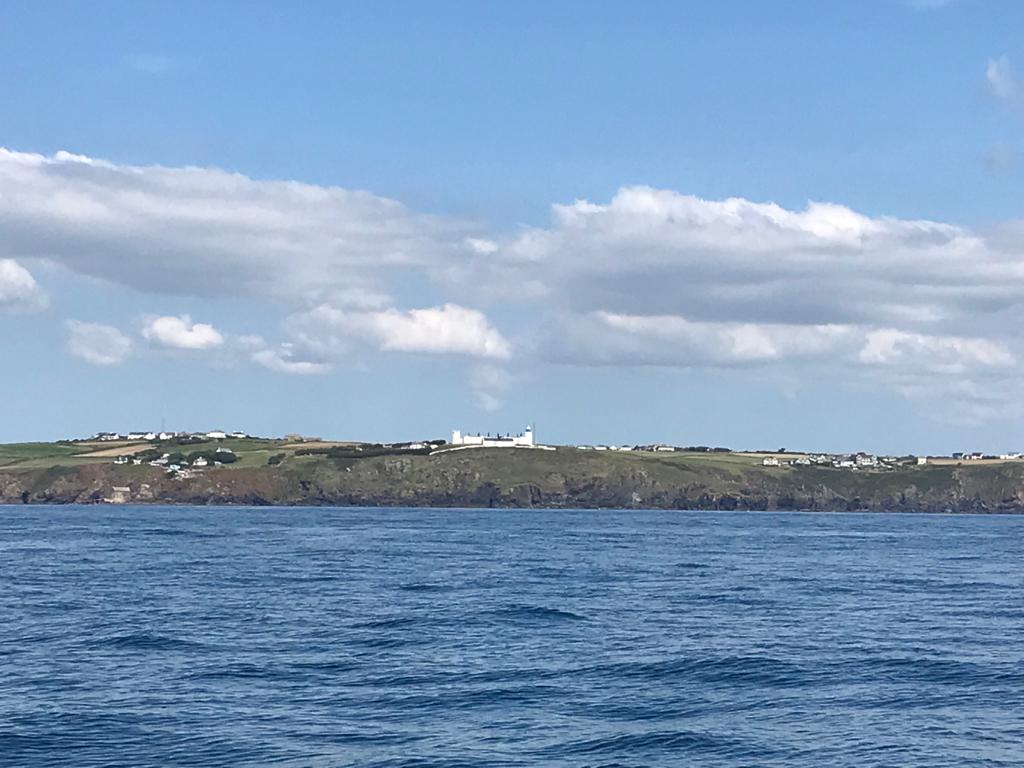
A smooth sail across Mounts Bay and into Newlyn at around 1600.
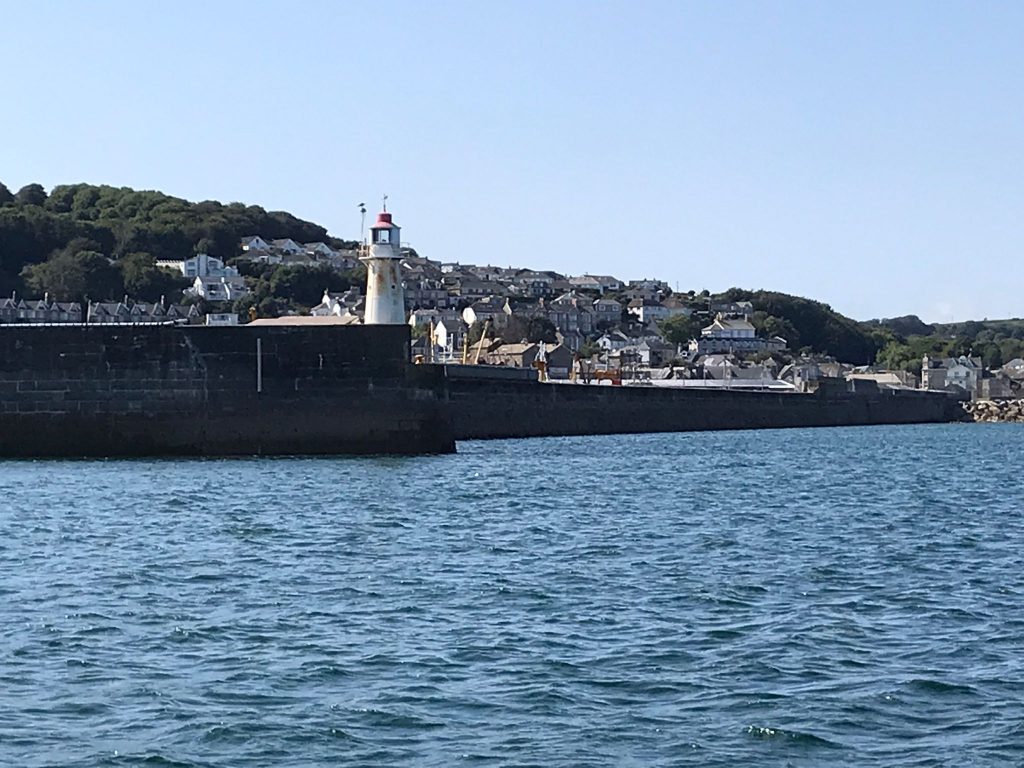
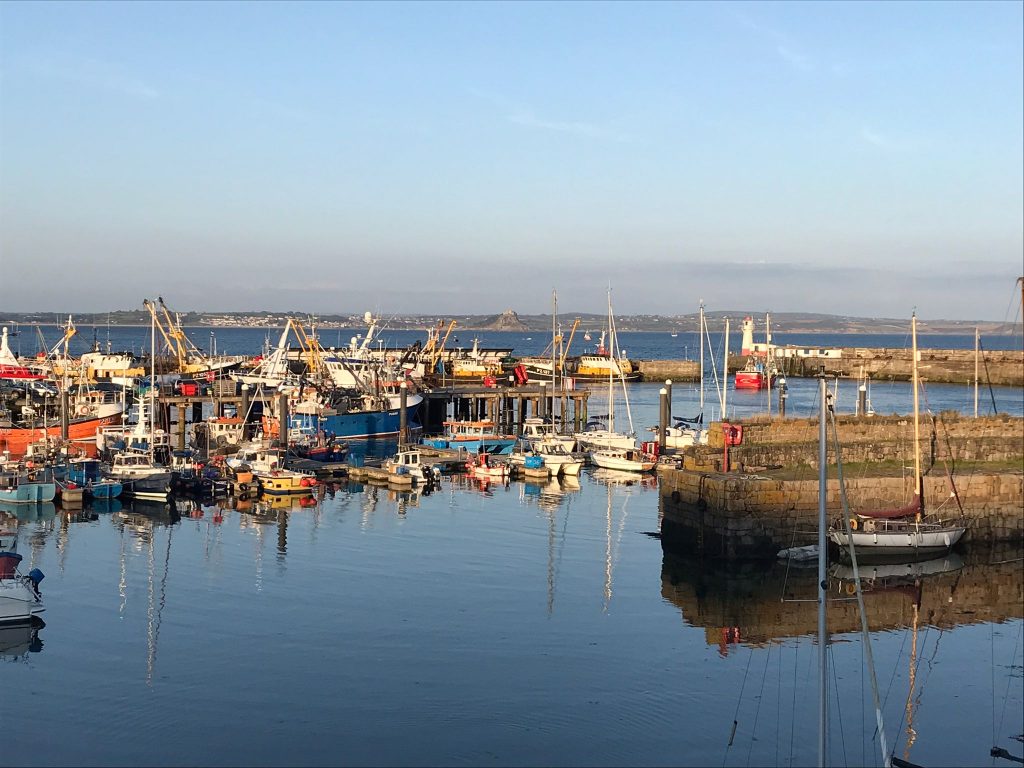
On the way up to the Red Lion for a fish supper.
Another classic sail, and the weather was really spoiling us. We started with a short motor up the river at Fowey, past Mixtow, as far as Wiseman Reach.
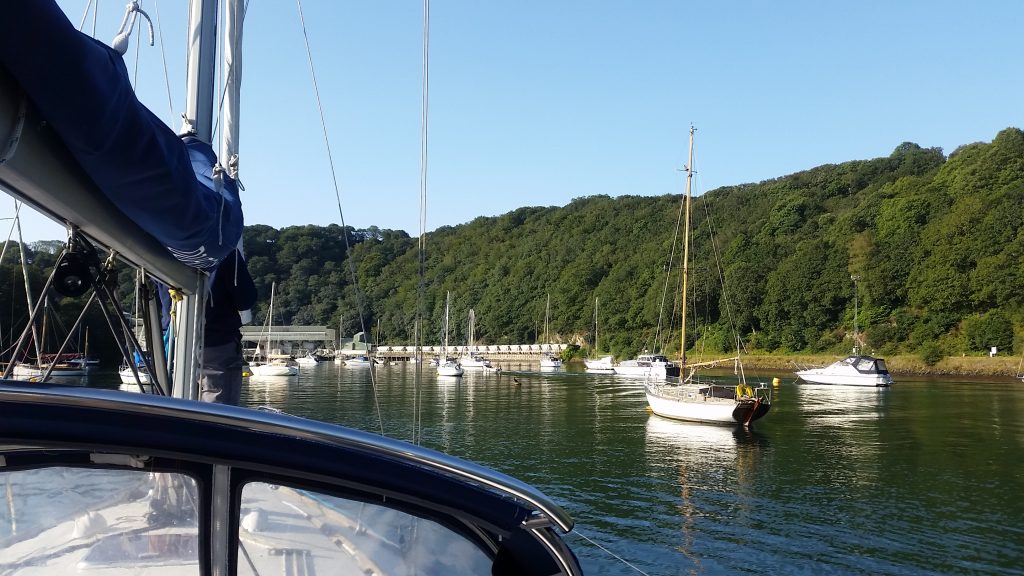

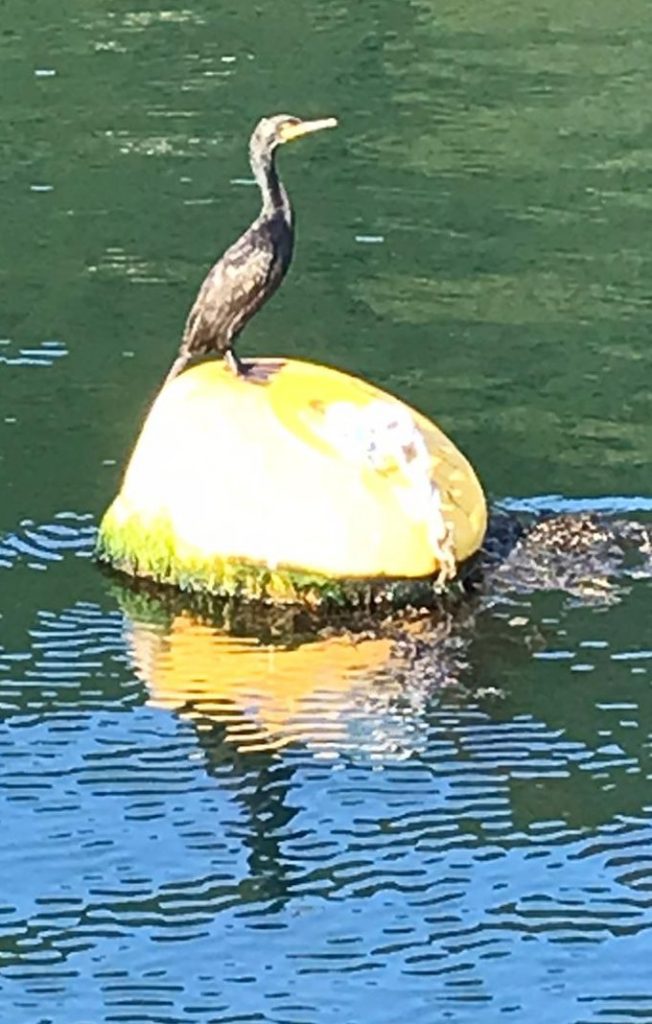
This chap did not move, even when we got quite close to his buoy. (Tim’s photo)
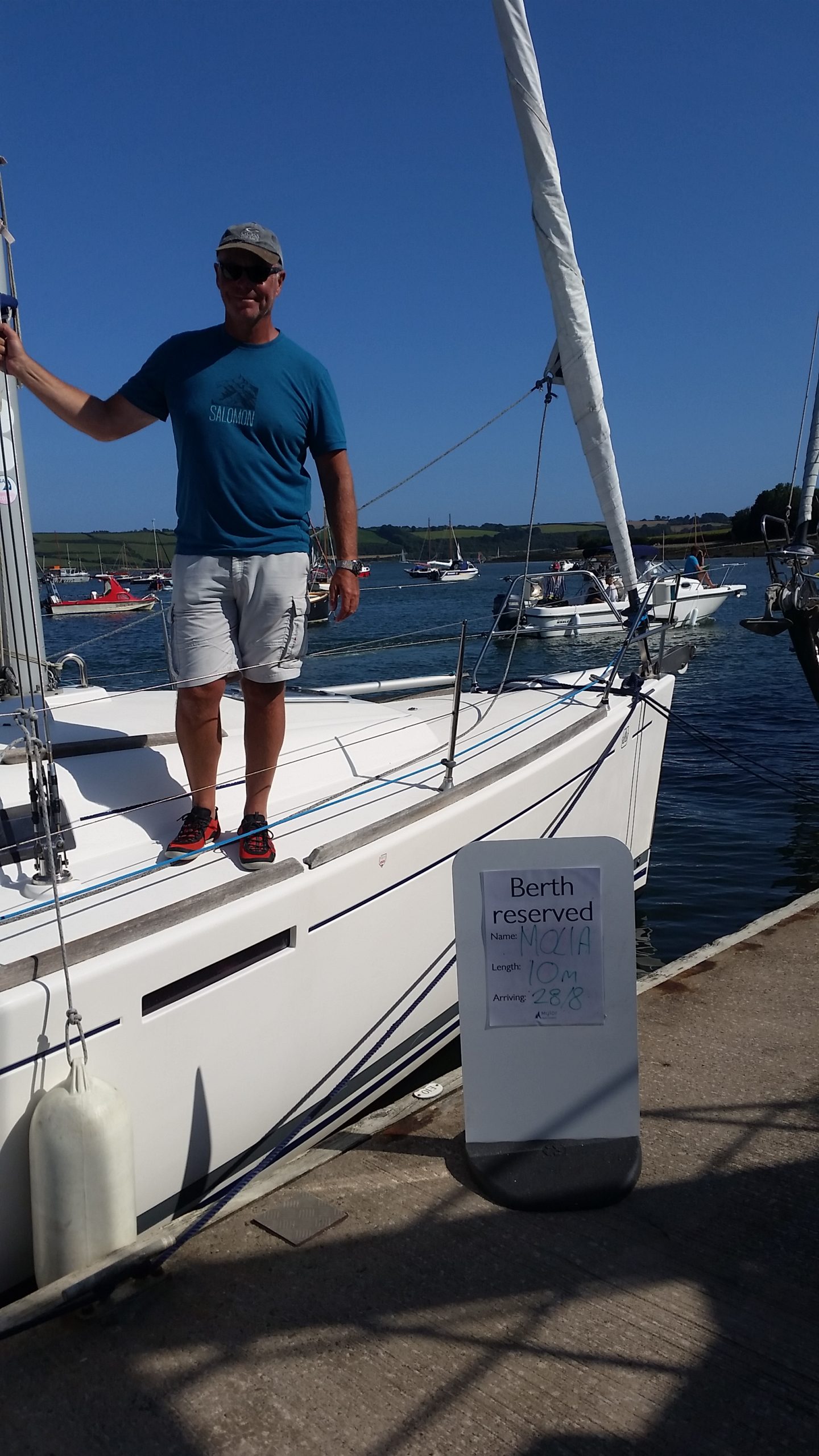
We have not had a reserved sign waiting for us at a marina before!
We had a drink at the yacht club, and then a great meal at the Castaways restaurant.
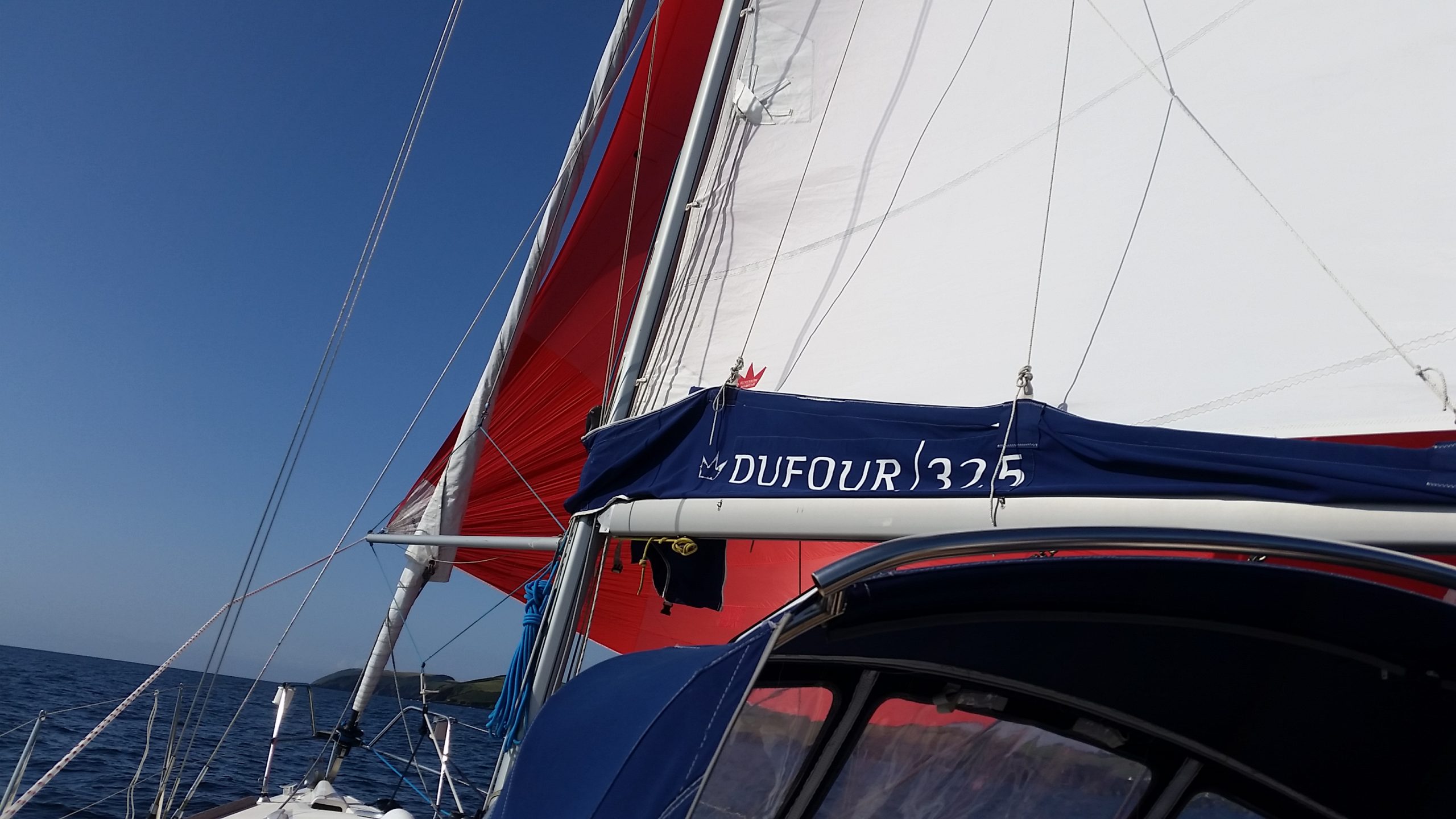
This is a classic sail for our day 3, and again light wind meant we were able to use the spinnaker. This time on a reach.
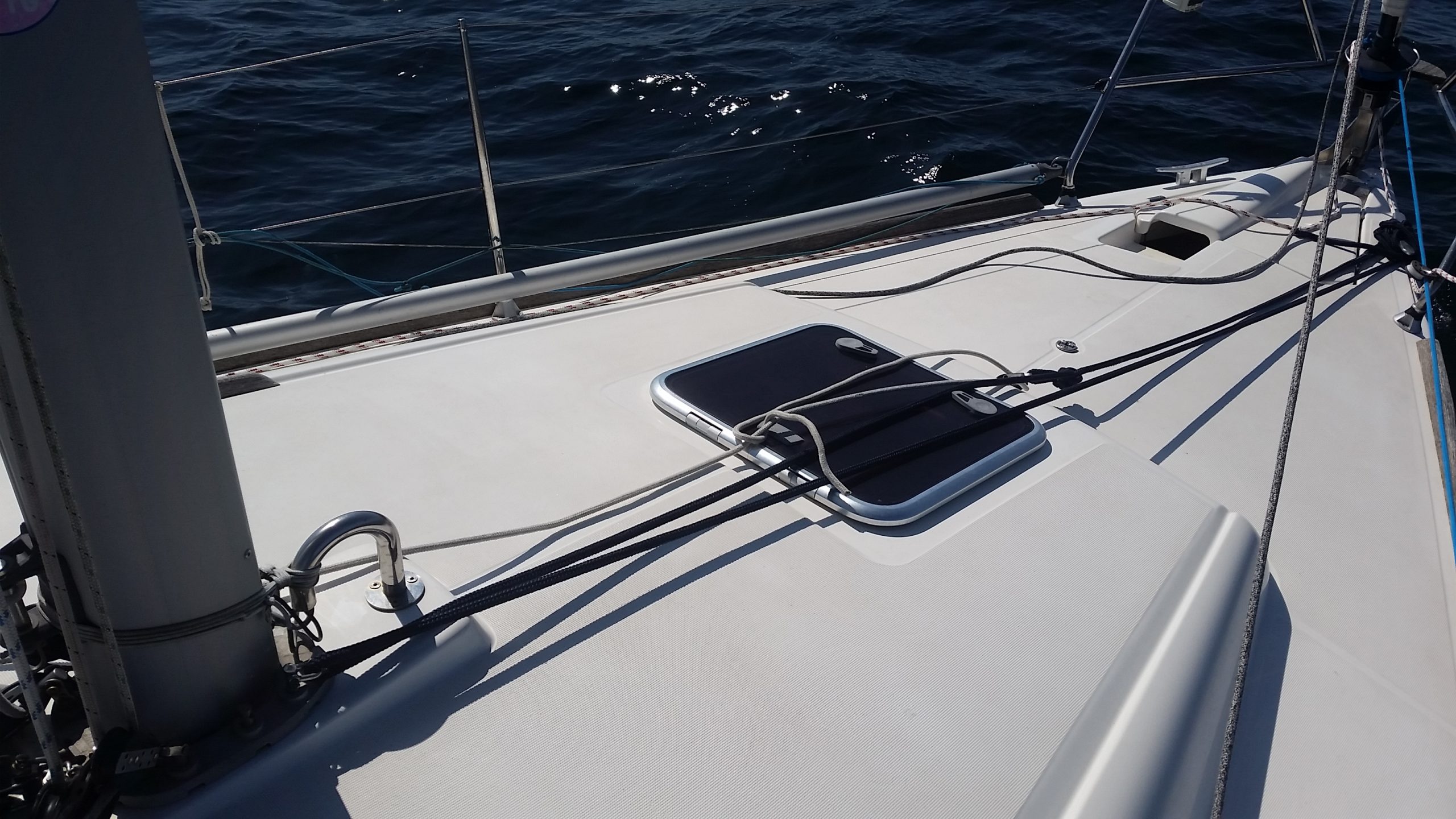
So we rigged the pole downhaul further aft using one of the mooring lines (not an ideal rope) as a strop between the base of the mast and a mooring cleat.
This worked much better for pole control – so I will create a more permanent arrangement using some dynema (that won’t stretch) when we get back to base.

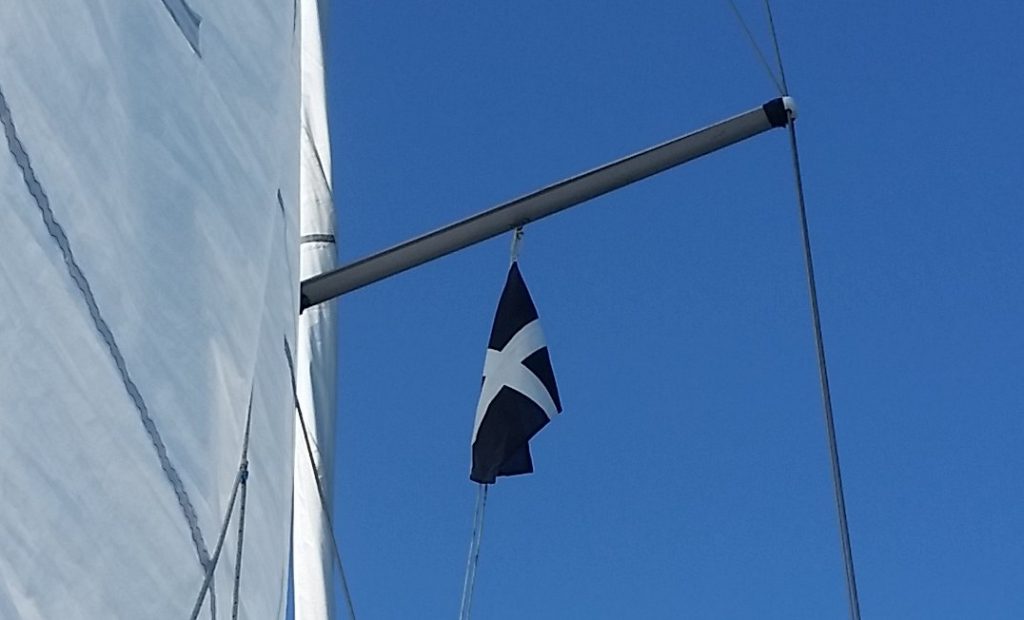
As we left Plymouth Sound and entered Cornwall – so we showed St Piran’s flag at the crosstrees once again.
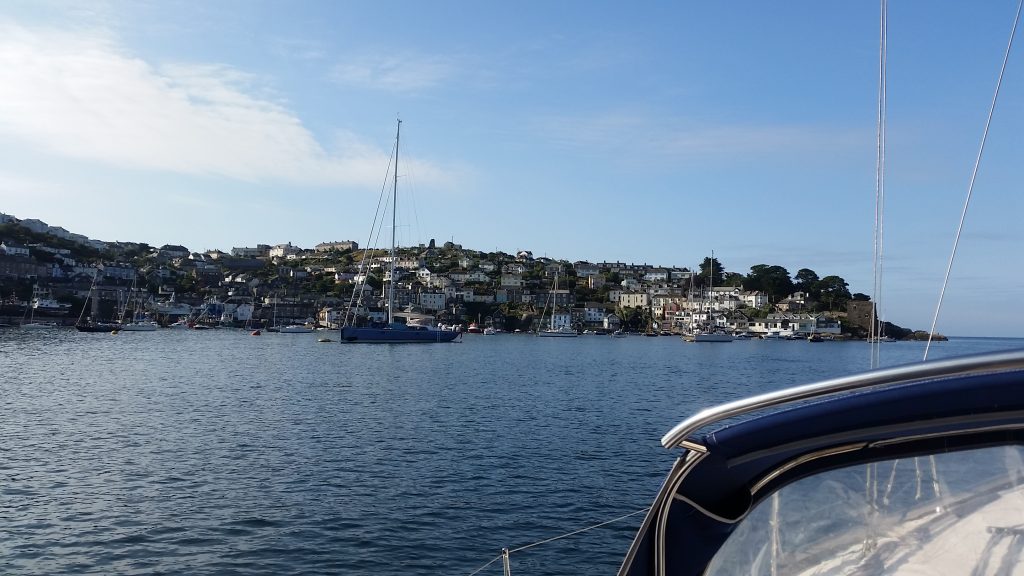
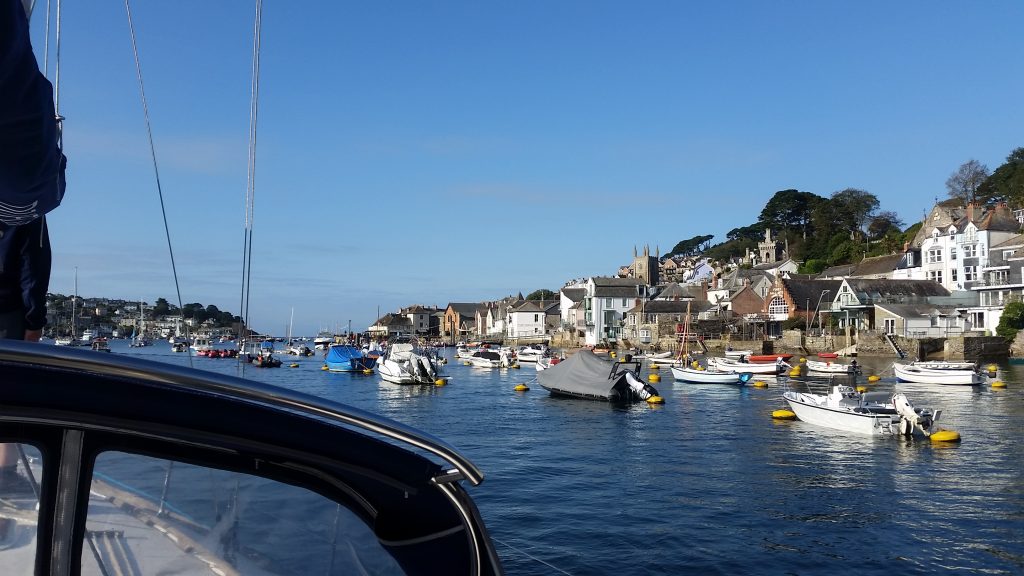
It is always a great pleasure to go into Fowey; and today the weather made the harbour look as though it was in the Mediterranean! We tied up to one of the visitor’s pontoons on the Polruan side, opposite the town.

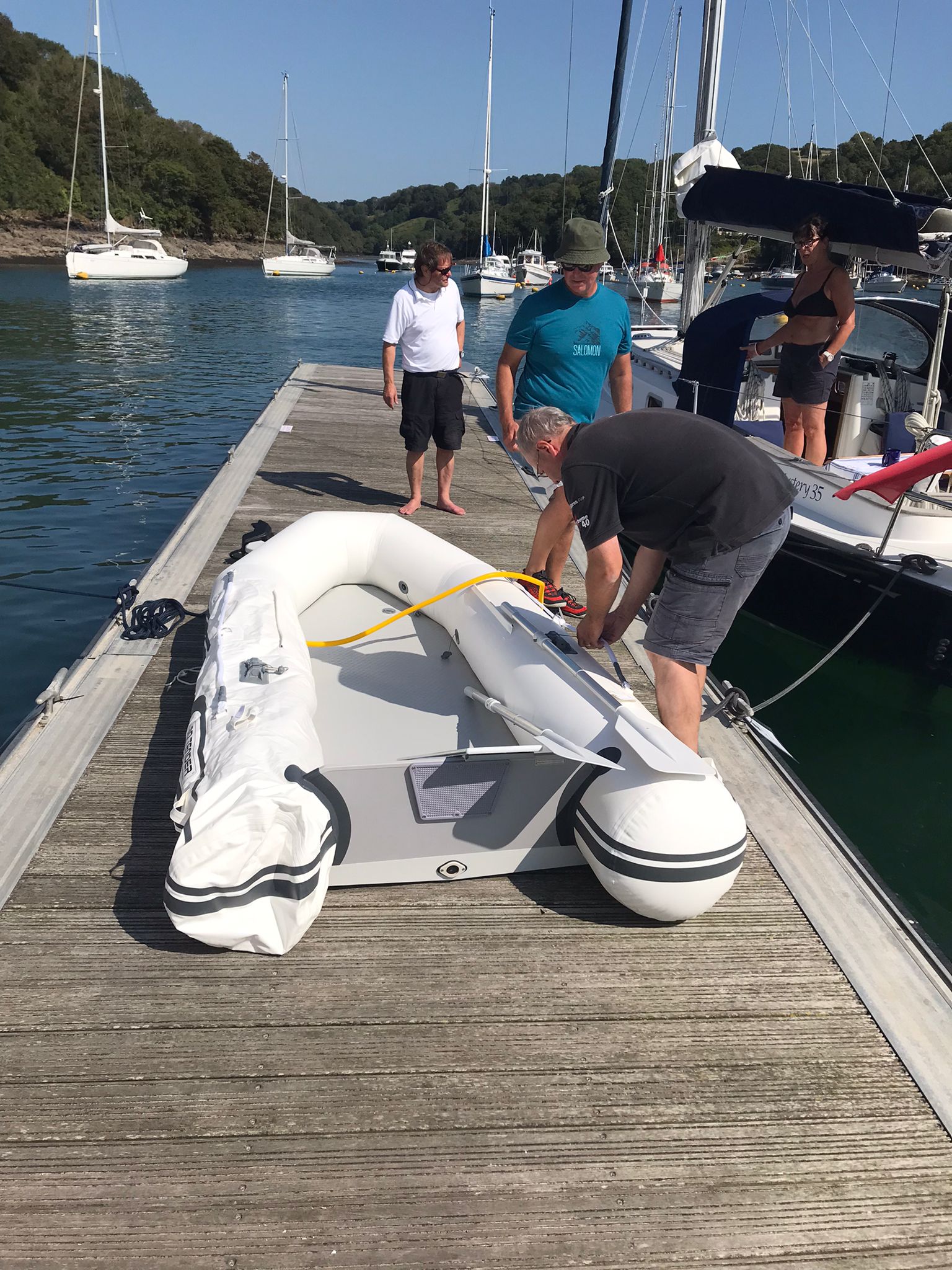
We inflated the tender to motor over to town for a little shopping. (Tim’s photos)
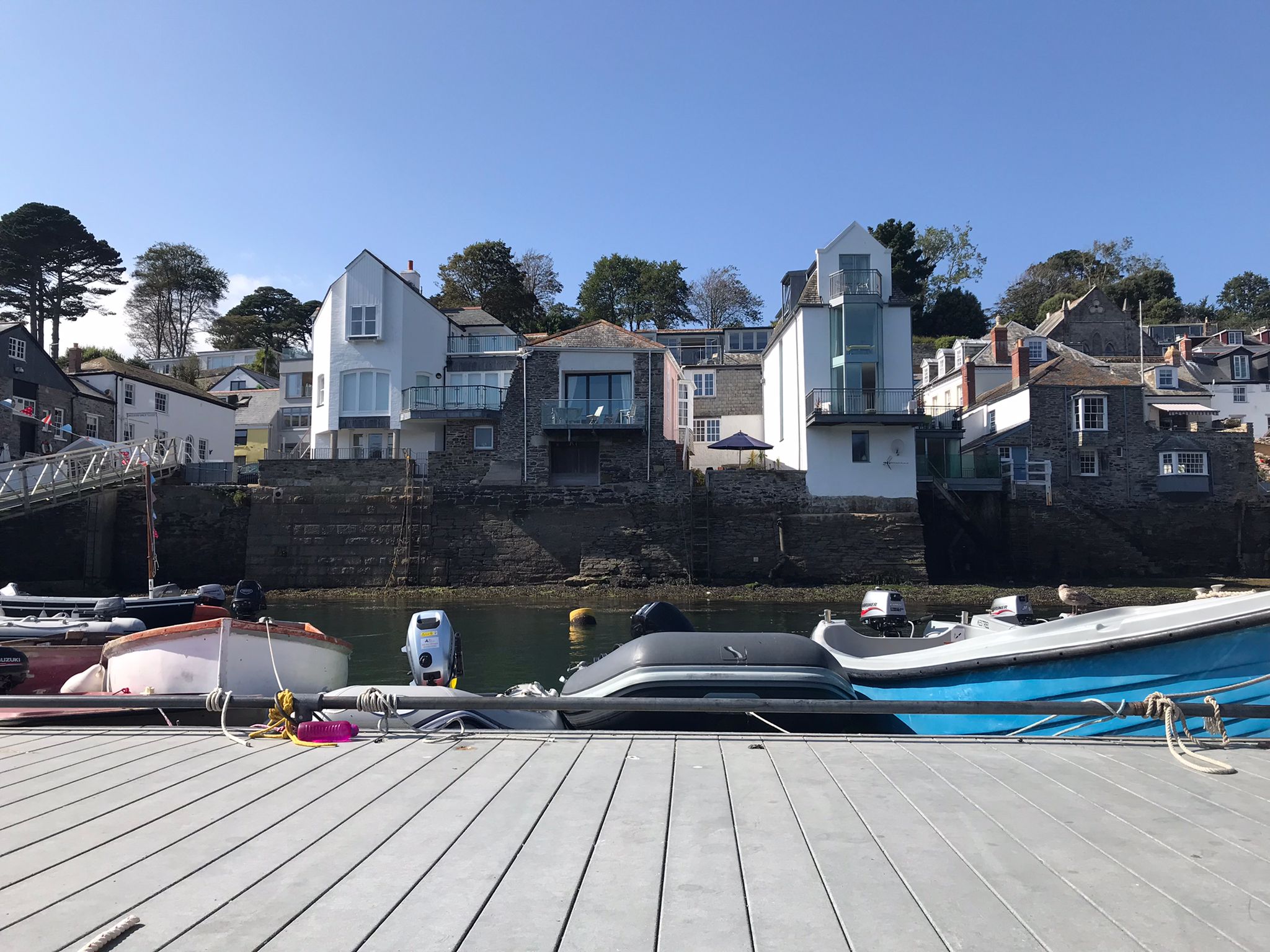

Seeing as we are in Cornwall, this is our dinner on the boat.
Having diverted to Torquay our day 2 was a bit longer that had we gone into Dartmouth or Salcombe. Light airs gave us the opportunity to hoist Molia’s spinnaker.
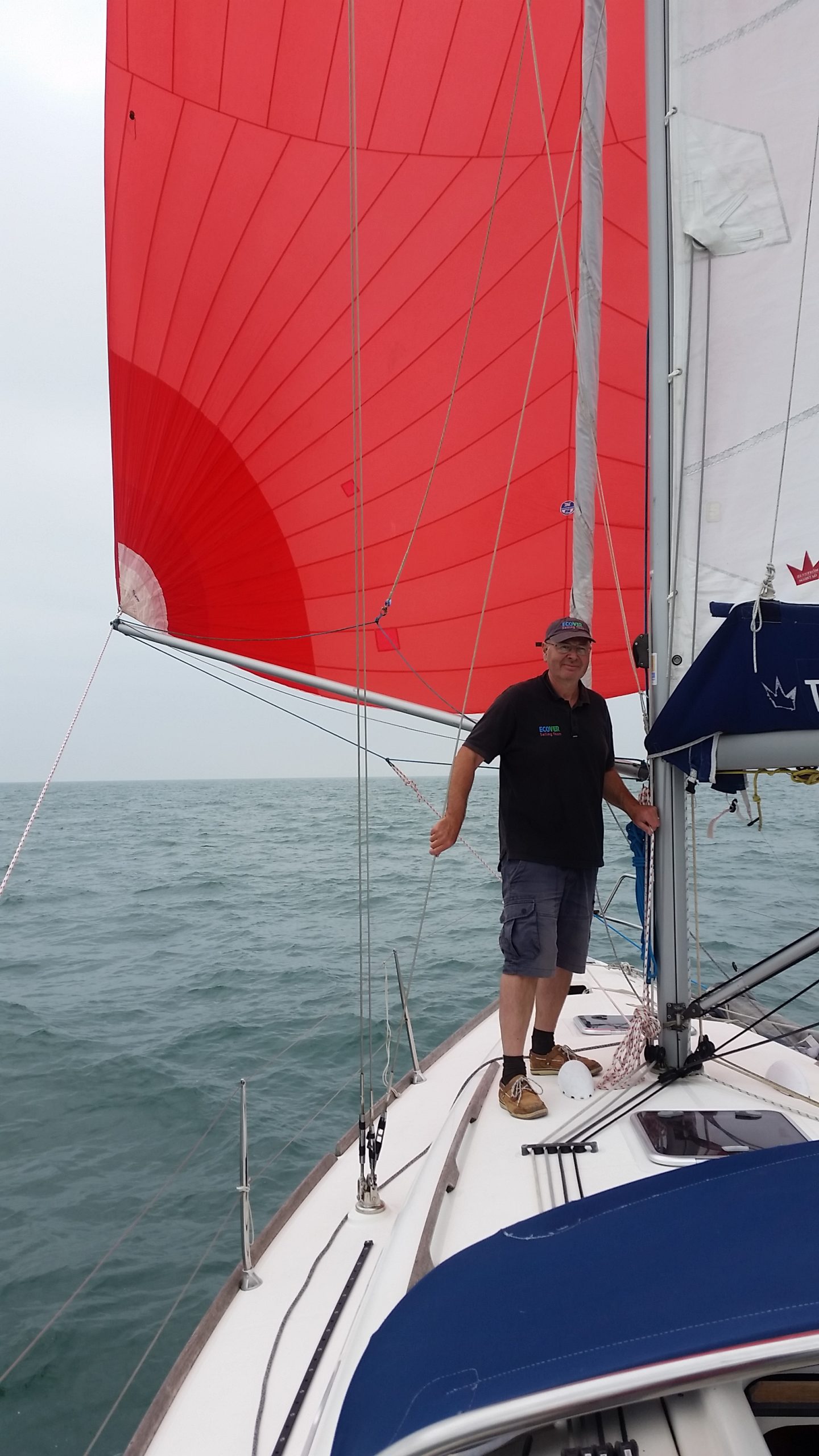
Today we rigged the pole downhaul forward onto a block attached to a strop between the two forward mooring cleats. The downhaul is then lead to the cockpit in place of the first reefing line. This arrangement was not ideal as the downhaul then has to be adjusted whenever the pole is moved forwards or backwards.
See: Plymouth to Fowey for a better pole downhaul arrangement.
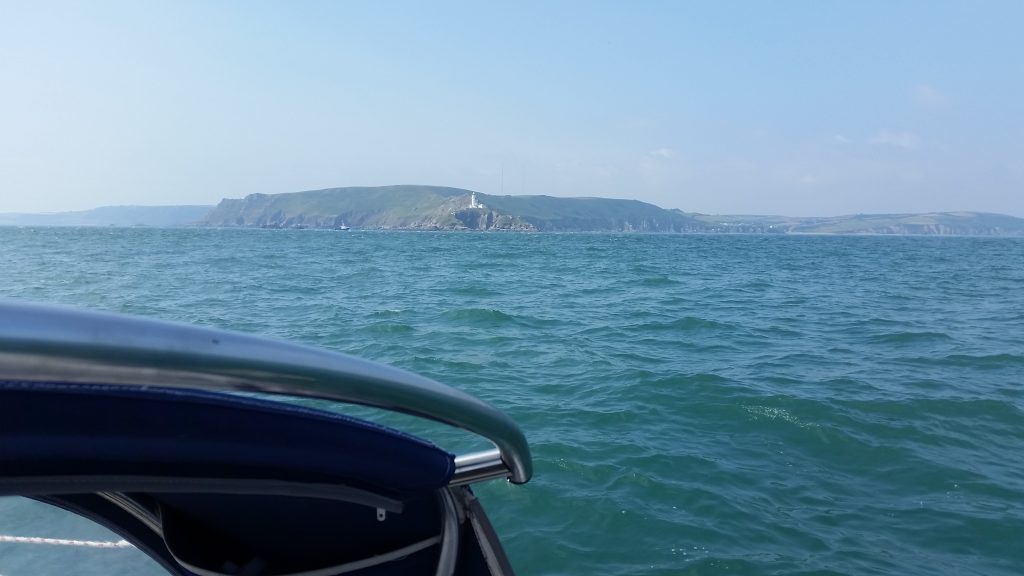

We had an excellent meal at The Bridge restaurant located in the Yacht Haven.
Day 1 of our return to Portishead cruise had to start early to catch a good tide around Portland Bill. We would have headed for Dartmouth, but as it was Dart Week, we needed an alternative. We were lucky to get a berth in Torquay Marina which none of us had visited before.

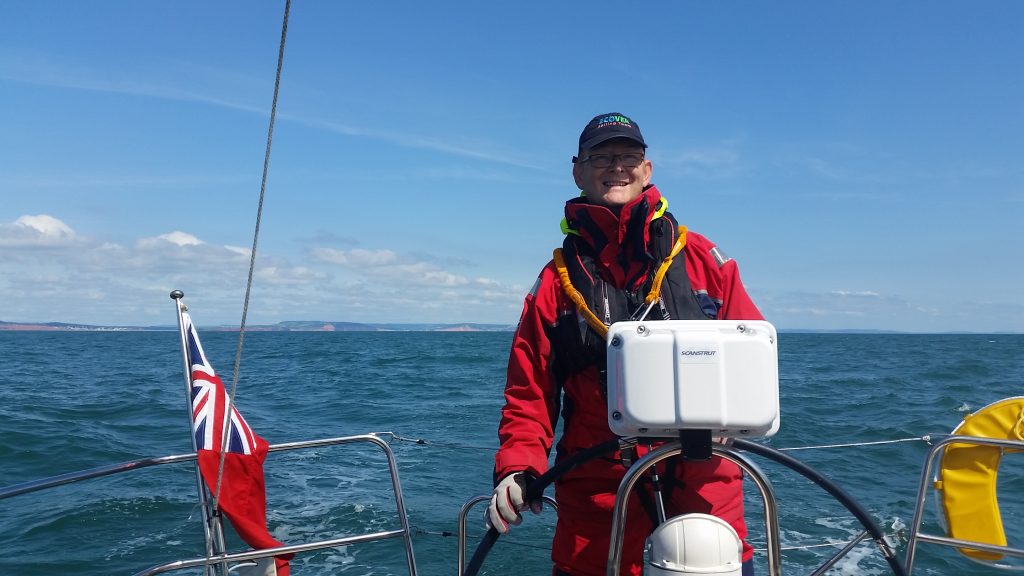

 Molia
Molia